EVANGELIESE FEMINISME IS OP ‘N GEVAARLIKE PAD*
deur dr. Robert Letham**
“That a connection exists between a revised doctrine of man and a correspondingly revised doctrine of God is evident not only from what is happening in practice but from the internal logic of theology itself. Evangelical feminism, as we have defined it, is on a dangerous path.” – dr. Letham
“Die praktyk om vroue tot die leer- en regerende ampte te orden het veld gewen in die laat twintigste eeu, wat veranderinge in die Westerse samelewing weerspieël. Dit het die standaard geword in baie Protestantse denominasies, behalwe in sommige konserwatiewe evangeliese en gereformeerde kerke. Alle gelowiges word geroep tot bediening, almal ontvang gawes vir bediening, en almal moet daardie gawes gebruik. Aan die einde van Romeine, waar Paulus groete aan sy medewerkers stuur, noem hy tien vroue onder die ses-en-twintig name. Met vroue wat tot feitlik elke ander soort werk toegelaat word, kan dit op sy beste anachronisties voorkom om hulle van die pastorale bediening te weerhou.
Die arbiter (finale deurslaggewende bepaler – slc) is egter die Skrif.
In 1 Timotheus 2:8–3:7 dring Paulus daarop aan dat die amp van opsiener beperk is tot sekere gekwalifiseerde (bekwame -slc) manne; dit is nie vir mans in teenstelling tot vroue nie, maar vir sommige mans wat aan die vereistes voldoen, in teenstelling met alle ander mans, vroue en kinders.
Dit is duidelik, as ons die hoofstukindelings korrek ignoreer (dit is deur latere redakteurs ingevoeg) , dat Paulus die episkopos (opsieners – slc) bespreek. Voorop is etiese en geestelike eienskappe, maar die vermoë om die evangelie te leer is deel daarvan. In kontras daarmee moet vroue stilbly en nie hierdie gesag opeis nie. ‘n Vrou mag nie ‘n volwasse man (ἀνήρ) onderrig nie.
Hoekom?
Paulus begrond die saak in die skeppingsorde. Adam is eerste gevorm, die vrou daarna (1 Tim. 2:12–15).
Hierdie vereiste is ‘n standaard wat verskille van kultuur en tye oorheers.
Die enigste alternatief is om óf te beweer dat Paulus gebonde was aan sy eie historiese en kulturele omgewing óf dat hy eenvoudig verkeerd was.
In beide gevalle verhef die lesers hulself bo-oor die apostel en die Woord van God.
Die Christelike geloof is (egter) ‘n saak van dissipelskap, van onderwerping aan Christus en sy apostels. Christus oordeel die kultuur; die kultuur het geen mandaat om te oordeel oor die Woord van Christus nie.
Dit beteken nie dat vroue verhinder word om onderrig te gee nie.
Inderdaad, Priscilla was prominent in samewerking met Aquila, haar man, nie as ‘n individu nie, maar as deel van die solidêre huishoudelike eenheid. Ouer vroue moet jonger vroue leer (Titus 2:3–5), iets waarvan Titus en, deur afleiding, mans in die algemeen uitgesluit is. Aan vroue word die lewensbelangrike taak van kinders kry gegee en word die opvoeding van kinders aan hul toevertrou, wat integraal deel is van die genadeverbond, maar bespot word deur baie van vandag se Westerse kultuur (1 Tim. 2:15).
Vir Christene, om hierdie groot voorreg te verkleineer, is om God se verbond aan te val, aangesien (die genadeverbond) werk in die lyne van huishoudings (verbondsgeslagte – slc). Die onderrig van die heel jonges in die grondbeginsels van die geloof – wanneer hulle verstand oop, opgeruimd en ontvanklik is – is noodsaaklik vir die welsyn van die kerk en die toekoms van die evangelie. Seker die meeste onderrig in die kerk word deur vroue gelei.
Die ampstaak van episkopos is daarvan uitgesonder; dit is tragies dat soveel dele van die kerk die Woord verlaat het en toegegee het aan die tydsgees. Deur dit te doen, onderdruk hulle hul profetiese stem, wat ‘n teen-kulturele benadering vereis.”
Sien ook hierdie twee artikels van dr. Letham, wat in meer detail die onderwerp aanspreek:
“The point is this: these extremes differ from Christian feminism in degree but not in kind. Members of both groups contribute to common symposia. Differences, yet common ground, are acknowledged by such as Ruether. Above all, the hermeneutical assumptions of the Christian feminists not only lead in this direction, they positively require that this step be taken. Once the experience of women is made determinative, once the authority of Bible and church is abandoned due to alleged patriarchal bias, once God and Christ are to be redefined as ‘not necessarily male’, the door is open in hermeneutical terms for the principial move to women’s religion, to worship not of a male God who cannot relate to women but to a female god with whom women can be one.”
The Man-Woman Debate: Theological Comment
“Conclusion. Let me sum up. All feminism has diverged from the historic Christian doctrine of man in its rejection of male headship and authority. As a result, its view of man has been disrupted due to a stress on the equality of man and woman without that equality finding expression in its created order. Entailed in this reshaping of the doctrine of man is a departure from the historic Christian doctrine of God.
Religious feminism and Christian feminism have either taken this step or are in the process of doing so. Their egalitarian leanings inevitably impinge on God. Moreover, since both God and man are to be understood from a perspective forged from feminist concerns, the place where God and man are personally united in the incarnation of the Son will most probably be next on the agenda for change. In fact, this development has already surfaced. This should come as no surprise.
Theology is a whole. Changes in one place affect others. If the doctrine of God is not central, discrepancies are likely to emerge in a range of areas. Feminism of all shades has adopted an anthropocentric (a gynecentric) theology. Reorientation can be expected across the board. As Oddie puts it, ‘The incarnation of Christ and the doctrine of the Trinity; sin and the fall of man; the doctrine of grace; the very notion of revelation and the authority of the Bible as the inspired word of God: the feminist theologians…are bent on the undermining of all these great supporting arches of the Church’s tradition.’
Can there be a danger that evangelical feminism may eventually follow such a realignment? If its evangelicalism is secure it should not do so. However, it is incontestable that the agenda has been set by the wider feminist movement, inside and outside the church. The nature of that agenda is increasingly plain. The direction of that wider movement, its own internal logic, is taking it away from any semblance of biblical Christianity. Moreover, let us see what doctrine of God is likely to emerge as evangelical feminism develops its themes. This is the problem it must face.
First of all, it could deny that man is a created finite analogue of God, the self-existent creator. In doing so, it would jeopardize the doctrine of the incarnation, which asserts precisely that, with the divine Logos personalizing the assumed human nature.
Second, if it accepts this as so, it could proceed to deny that the relation of authority in the Trinity finds a created counterpart in man, the headship of the man being seen instead as culturally qualified and time-conditioned. There are several difficulties that arise from such a position. If man is truly the image of God yet at precisely those points where the focus of the image becomes specific in terms of relationality he is not held to mirror or to represent God, we may be justified in asking exactly what positive value such a concession may have.
Moreover, if authority structures in man are held to be relative to culture and the headship of the man is consequently regarded as purely ephemeral, then such structures do not reflect the character of God and are then seen as projections by male theologians limited and colored by their own societal conditioning or personal prejudice. However, if we wish to preserve the eternal coequality of Father, Son, and Holy Spirit without such internal relations, then (a) God’s self-revelation in the economy of revelation and redemption is not a true self-revelation and we are back to modalism, or (b) we are driven toward tritheism, with three coequal but subsistentially undifferentiated personae. That a connection exists between a revised doctrine of man and a correspondingly revised doctrine of God is evident not only from what is happening in practice but from the internal logic of theology itself.
Evangelical feminism, as we have defined it, is on a dangerous path.
One is not suggesting that individual conservative theologians who embrace feminist concerns are themselves about to abandon an orthodox view of God. However, one fails to see how evangelical feminism as such can consistently or for long preserve the historic Christian doctrine of the Trinity.”
__________________________________
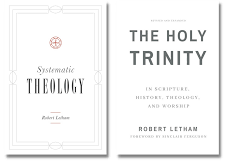
* Met erkenning aan die bron, vertaal uit: Systematic Theology (Wheaton, Illinois: Crossway Books), 2019, p. 811-812. Beklemtonings bygevoeg.
** Meer inligting oor die skrywer: https://www.greystoneinstitute.org/robert-letham
 PRO REGNO
Leave a comment