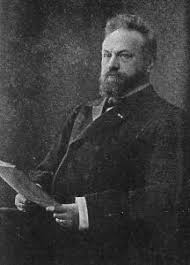
BAVINCK AAN DIE WOORD*
A. DIE LEER EN BELYDENIS VAN GOD DRIE-ENIG IS DIE WESE VAN DIE CHRISTELIKE GODSDIENS
“The confession of the trinity is the sum of the Christian religion. Without it neither the creation nor the redemption nor the sanctification can be purely maintained… The thinking mind situates the doctrine of the Trinity squarely amid the fullorbed life of nature and humanity. A Christian’s confession is not an island in the ocean but a high mountaintop from which the whole creation can be surveyed. And it is the task of Christian theologians to present clearly the connectedness of God’s revelation with, and its significance for, all of life. The Christian mind remains unsatisfied until all of existence is referred back to the triune God, and until the confession of God’s Trinity functions at the center of our thought and life.”
B. CHRISTUS DIE SLEUTEL VAN ALLE TYE, PLEKKE EN VOLKE
“Thus the whole revelation of the Old Testament converges upon Christ, not upon a new law, or doctrine, or institution, but upon the person of Christ.
A person is the completed revelation of God; the Son of Man is the own and only-begotten Son of God. The relationship of the Old and New Testament is not like that of law and gospel. It is rather that of promise and fulfillment (Acts 13:12 and Rom. 1:2), of shadow and body (Col. 2:17), of image and reality (Heb. 10:1), of shaken and unshakenthings (Heb. 12:27), of bondage and freedom (Rom. 8:15 and Gal. 4).
And since Christ was the real content of the Old Testament revelation (John 5:39; 1 Peter 1:11; and Rev. 19:10), He is in the dispensation of the new covenant also its capstone and crown. He is the fulfillment of the law, of all righteousness (Matt. 3:15 and 5:17), of all promises, which in Him are yea and amen (2 Cor. 1:20), of the new covenant which is now established in His blood (Matt. 26:28). The people of Israel itself, with all its history, its offices and institutions, its temple and its altar, its sacrifices and ceremonies, its prophecy, psalmody, and wisdom teaching, achieves its goal and purpose in Him.
Christ is the fulfilment of all that, first of all in His person and appearance, then in His words and works, in His birth and life, in His death and resurrection, in His ascension and sitting at the right hand of God. If, then, He has appeared, and has finished His work, the revelation of God cannot be amplied or increased. It can only be clarified by the apostolic witness, and be preached to all nations. Since the revelation is complete, the time is now come in which its content is made the property of mankind. Whereas in the Old Testament everything led up to Christ, in the New Testament everything is derived from Him. Christ is the turning point of times. The promise, made to Abraham, now comes to all nations.
The Jerusalem which was below gives way to the Jerusalem which is above and is the mother of us all (Gal. 4:26). Israel is supplanted by the church out of all tongues and peoples. This is the dispensation of the fulness of times, in which the middle wall of partition is broken down, in which Jew and Gentile is made a new man, and in which all is gathered together under one head, namely, Christ (Eph. 1:10 and 2:14–15).
And this dispensation continues until the fulness of the Gentiles is come and Israel is saved. When Christ has gathered His church, prepared His bride, accomplished His kingdom, He will give it to the Father in order that God may be all in all (1 Cor. 15:28). I will be thy God, and ye shall be my people: that was the content of the promise. This promise is brought to its perfect fulfillment in the new Jerusalem in Christ, through Him who was and who is and who is to come (Rev. 21:3).”
C. CHRISTUS EN DIE CHRISTENDOM IS TOTAAL UNIEK TEENOOR AL DIE ANDER VALSE GODSDIENSTE
Buddha and Confucius, Zarathustra and Mohammed are indeed the of the confessors of the religion founded by each of them, but they are not themselves the content of such religion. Their connection with it is in a sense accidental and external. Their religion could remain the same even though their name should be forgotten or their persons be supplanted by others. In Christianity, however, all this is very different. True, the idea has sometimes been expressed that Christ, too, never wanted to be the sole Mediator, and that He would gladly acquiesce in the neglect of His name, if only His principle and Spirit lived on in the church. But others, who have themselves cut off all connection with Christianity, have in an impartial way attacked this idea and have refuted it.
Christianity stands in a very different relationship to the person of Christ than the other religions do to the persons who founded them. Jesus was not the first confessor of the religion named after His name. He was not the first and the most important Christian. He occupies a wholly unique place in Christianity. He is not in the usual sense of it the founder of Christianity, but He is the Christ, the One who was sent by the Father, and who founded His Kingdom on earth and now extends and preserves it to the end of the ages. Christ is Himself Christianity. He stands, not outside, but inside of it. Without His name, person, and work there is no such thing as Christianity. In one word, Christ is not the one who points the way to Christianity, but the way itself. He is the only, true, and perfect Mediator between God and men at which the various religions in their belief in a mediator have surmised and hoped, that is actually and perfectly fulfilled in Christ.”
D. GEES EN WOORD MAG NOOIT LOSGEMAAK WORD VAN MEKAAR NIE
“That is why Christ gave both: His word and His Spirit. And it is the Spirit of Christ who makes the same testimony in the word of Scripture and in the hearts of the believers. In regeneration the Spirit plants the word in our hearts ( James 1:18, 21 and 1 Peter 1:23, 25), and He conducts the spiritual life of the believers, in accordance with His nature, always back to the word in order so to feed and to strengthen it. Here on earth we never graduate beyond the need for the Scripture, for this Scripture is the only means to bring us into fellowship with the actual Christ, who was crucified, but now is seated at the right hand of God. Christianity is an historical religion but also a religion of the present. It has a word which draws for us the portrait of Christ, but it also has a Spirit by whom the living Christ Himself dwells in our hearts. That is why faith is knowledge; and trust both. It is an acceptance of Christ Himself in the garment of Holy Scripture.”
“There are others who follow a very different course of thought. They are called zealots, antinomians, enthusiasts, or mystics, and they talk much of the Spirit, and they underestimate the role of the Word in the conversion of men. As they see it the Word, the Holy Scripture, the preaching of the gospel, is not the spiritual reality itself, but is only token and symbol of it. In itself the Word is but a dead letter which cannot penetrate to the heart of man nor implant there the principle of the new life. At best the Word can have only an enlightening influence on the mind.
But it gives off no power or force which can change and convert the heart. That can take place only and does take place only through the Holy Spirit, who penetrates immediately and directly from God into the inmost being of man and makes him share in the reality of which the Word is but the sign. The spiritual man is therefore directly born of God and taught of God. He alone understands the Scripture, gets behind the letter to the core and essence of it. This spiritual man does for a time make use of Scripture as a norm and guiding principle, but it is not the source of his religious knowledge, for he is subjectively taught by the Spirit of God and gradually grows beyond the Scriptures.
As the influence of the Spirit gradually emancipates the heart of man more and more completely from the Scriptures, the heart of man also comes to stand more independent of the person of Christ and the whole of historic Christianity. In its further development, then, mysticism turns into rationalism. For when the internal operation of the Spirit is separated from the word of Scripture, it loses its special character and can no longer be distinguished from the common operation of the Spirit of God in the reason and conscience of man. God by nature dwells with His Spirit in every man, according to this view, and from his birth, man has the internal word written on his heart. To this Christ only gave a certain inflection.
Something is true not because it is written in the Bible but because it is true. Christianity is the original natural religion. It is as old as the world and in its essence it lies at the basis of all historical religions. Mysticism is always and again going over into rationalism, and rationalism periodically falls back into mysticism. The extremes touch each other and shake hands.
The Christian church has always tried to avoid these heresies and to keep Word and Spirit in relationship with each other. But in doing this it has in its several confessions nevertheless followed several courses.
The Roman church, for instance, sees in the Holy Scripture and in the ecclesiastical tradition not a real means of grace but only a source of truth. Thee rational apprehension of this truth is called faith. But because this faith is purely an approbation, it is inadequate for salvation, and consequently has only a preparatory use to that end. The real saving grace is extended for the first time in the sacrament, and thus Rome recognizes the work of the Holy Spirit above all things in the founding and maintaining of the church in its offices of teaching, shepherding, and ministering at the altar, and next in the supernatural grace, virtues, and gifts given to the faithful by means of the sacrament.
Against this attempt to separate the saving operation of the Spirit from the word, and to attach it only to the sacrament, the Reformation took up the cudgels. It restored Scripture not only as the one, clear, and adequate source of truth, including tradition, but honored it also as means of grace and restored to the word its primary place in relation to the sacrament.
Accordingly the Reformation felt itself compelled to reflect more deeply on the relationship of Word and Spirit. It was compelled to do this the more because on all sides the old heresies were revived and were finding powerful defenders.
While the Socinians returned to the teachings of Arius and Pelagius, regarded the gospel as a new law, and felt no need for a particular operation of the Holy Spirit the Anabaptists again took the way of mysticism, glorified the internal word, and spoke of Holy Scripture as a dead letter and an empty symbol.
It required a great deal of effort to find the right path again. The Lutheran and the Reformed churches took different ways.
The Lutherans united Word and Spirit so completely as to run the risk of identifying them, and to lose the distinction between them altogether. They even came to the point of enclosing the saving grace of the Spirit in the word and to permit Him entrance to man only through the word. Since Holy Scripture came into being by the Holy Spirit, that Spirit had made His power of converting residual in the word, depositing it there, so to speak, as in a vessel. Just as bread has a natural, internal, nutritive power, so Scripture received from the Spirit who brought into being an inner spiritual power to save man. Scripture is therefore not merely to be credited with a power to enlighten the mind and morally influence the will, but by the indwelling influence of the Holy Spirit it has also an inner, heart-renewing, and saving power. And the Holy Spirit never works in any way except through the word.
The Reformed churches simply could not take this view, for in this matter, too, their principle was relevant that the finite can never absorb and comprehend the infinite. Word and Spirit consequently might be very intimately related, but they also remain distinct. The Spirit can work and sometimes does work without the word. When the Spirit joins Himself with the Word, He does so because of His free choice. In accordance with His good pleasure He usually does work in connection with the word, and in the place where the word is present and preached, namely, in the sphere of the covenant of grace, in the communion of the church.
But even then He lives, not as the Lutherans represented it, in Holy Scripture or the preached word, but in the church as the living body of Christ. Nor does the Spirit work through the word as through a vehicle of His power. While combining His operation with that of the word, He Himself personally penetrates to the heart of man and renews it to eternal life.
If we are to get a right understanding of the relationship of Word and Spirit, we must proceed from the fact that, not only in the offer of Christ and all His benefits, but also in all of His works with the world, God makes use of the word as a means. In Holy Scripture the word is never an empty sound or a meaningless sign, but always a thing of power and of life. It has in itself something of the personality, of the soul, of the speaker and therefore never returns void, always effects something.
When God speaks, it is done (Ps. 33:9). His word does not return to Him void, but accomplishes that which He pleases, and prospers in the thing for which it is sent (Isa. 55:11). By His word He brought everything into being from nothing at the beginning (Gen. 1:3ff. and Ps. 33:6), and by the word of His power He upholds all things (Heb. 1:3). His word has such a creative and sustaining power because God speaks in the Son (John 1:3 and Col. 1:15), and through the Spirit (Ps. 33:6 and Ps. 104:30), and in both these, as it were, gives Himself to His creatures. There is a voice of God in all creatures; they all rest on thoughts which He has spoken. They all owe it to the word of God that they exist and that they are such as they are.”
E. CHRISTUS VERVUL DIE WERKSVERBOND DEUR DIE GENADEVERBOND, HY VERNIETIG DIT NIE, DAAROM VERWERP ONS ANTINOMIANISME (WETSVERAGTING)
“Law and gospel are the two component parts of the Word of God. The two are distinguished from each other but they are never separated. They accompany each other throughout Scripture, from the beginning to the end of revelation. The discrimination of law and gospel is therefore a very different distinction from that between the Old and New Testament. It is so confused and identified by all who see in the law an imperfect gospel and in the gospel a perfected law. But the two distinctions differ mutually from each other and are therefore to be careful kept from being identified.
Old and New Testament are the names of two successive dispensations of the same covenant of grace and therefore of the two groups of books of the Bible corresponding to these two dispensations. But the distinction between law and gospel puts us on very different plane. These terms designate, not two dispensations of one and the same covenant, but two entirely different covenants. The law really belongs to the so-called covenant of works which was concluded with the first man and which promised him eternal life in the way of perfect obedience. But the gospel is the proclamation of the covenant of grace which was made known for the first time after the fall of man, and which gives him eternal life by grace, through faith in Christ.
The covenant of grace is, however, not the discarding or annihilating, but rather the fulfilling, of the covenant of works. The difference between the two is mainly that in our stead Christ fulfills the requirement which God by reason of the covenant of works can bring to bear on us. Hence it is that the covenant of grace, although in itself it is pure grace can from the very beginning put the law of the covenant of works into its service, unite itself with that law, and by the Spirit of Christ bring to fulfillment in the believers.
The law keeps its place in the covenant grace, not in order that we by keeping it should try to earn eternal life for the law cannot do this because of the weakness of the flesh, but, in the first place, in order that through it we should come to know our sin, our guilt, our misery, and our helplessness, and, struck down and stripped by the consciousness of guilt, should take refuge in the grace of God in Christ (Rom. 7:7 and Gal. 3:24), and, in the second place, in order that we, having died and been raised with Christ, should walk in newness of life and so fulfill the righteousness of the law (Rom. 6:4 and 3:4).
Thus there is no room in Christianity for antinomianism, for despising or violating the law. Law and gospel should go together, as in the Scriptures, so also in preaching and teaching, in doctrine and in life. They are both indispensable and real constituent parts of the one complete word of God. All the same, identifying the two is as bad as separating them. Nomism, which makes of the gospel a new law, is in error no less than antinomianism. Law and gospel differ from each other not in degree but in kind.
They differ as demand and give differ, as commandment and promise, and as question and offer differ. It is true that the law as well as the gospel comprises the will of God, and that it is holy, wise, good, and spiritual, but it has become impotent by reason of sin, does not justify but rather aggravates sin, and provokes wrath, doom, and death.
And over against this stands the gospel which has Christ as its content (Rom. 1:3 and Eph. 3:6), and which brings nothing but grace, reconciliation, forgiveness, righteousness, peace, and eternal life. What the law demands of us is given us in the gospel for nothing.”
If law and gospel are distinguished in this way, it follows that the general calling, too, which in nature and conscience comes to all men, and the special calling which reaches everyone who lives in Christendom, do not differ in degree but in essence and kind. The difference does not consist of the fact that Christianity offers us a better, more perfect law than is known to the Gentiles, but of this, rather, that it proclaims something new, brings us the gospel, and in that gospel acquaints us with the person of Christ.”
F. DIE WARE CHRISTELIKE GELOOF HET ‘N EWIGE EN TYDELIKE LEWENS- EN WERELDBESKOUING: ONS VERWERP BEIDE LOSBANDIGE WERELDGELYKVORMIGHEID EN PERFEKTIONISTIESE WERELDONTVLUGTING
“Further, Scripture holds up the highest of moral ideals before the believers. The tendency is to ride rough-shod over this fact. It is said that the moral life which Christendom wants is one-sided, over-spiritual, exclusively directed to the life in heaven, quite averse to the embrace of earthly concerns, antagonistic to culture, the sort of thing which throws the poor and the oppressed the sop of eternal life hereafer but is altogether indifferent to the improvement of their condition here on earth, something which may be perhaps rich in passive virtues and full of prescriptions about subjection, long-suffering, and patience, but poor in the active virtues which can lead to a conquest and reform of the world.
Hence there were many who aspired to a different, better, and higher morality, to an ethical teaching which laid down a dedication to the service of humanity as the highest duty, and which limited its point of view to that of the life on earth.
A concern for earthly interests is in itself, however, in such little conflict with Christian morality that it can in fact be said to be based and founded on the creation of man according to God’s image. Man was and in a certain sense still is the image bearer of God, and he is therefore called to subdue the earth and to have dominion over the subdue of the sea, the fowl of the air, and all the animals that creep upon the earth (Gen. 1:26–28 and Psalm 8). There is no book that does so much justice to the whole of nature as the Holy Scripture.
Paganism is always vacillating between an arrogant abuse of the world and a slavish, superstitious fear of its mysterious power.
But Moses and the prophets, Christ and the apostles, stand perfectly free over against the world, because they are raised above it by the fellowship with God. And, although it is true that Scripture enjoins it upon us to seek the kingdom of heaven first, and although it is further true that the Christians of that early period, tiny group as they were, had to withdraw from numerous circles of life and had to abstain from many things because in the world of that time virtually everything was permeated by the pagan spirit, Christianity in principle included within itself all of the elements which not only gave the freedom to subdue the world and have dominion over the earth but also made these accomplishments the duty and the calling of man.
Afer all, the Christian ethic is none other than the one briefly and pointedly comprised in the ten commandments and which, for the rest, is illuminated and interpreted throughout the whole of Scriptures. In those commandments the love of God stands in the foreground, but the love of the neighbor is the second law, like unto the rest. In this love of the neighbor there lies contained, provided it be properly understood, not in a Buddhistic, passive sense but in its Christian, active character, the duty of mission, of reformation, and of culture. By missions the religious and moral possessions of Christianity accrue to all peoples and nations; by reformation, which is not limited to one period in the church of Christ, nor to one moment in the life of the Christian but must always go on, there takes place the progressive renewal of heart and life, of family and society according to the demand of the Lord’s will; and by culture the subduing of the earth to the control of man, the dominion of matter by spirit, and of nature by the reason, takes place.
The kingdom of heaven, which must be sought first, brings all the other things in its wake (Matt. 6:33). Godliness is profitable to all things having promise of the life that now is, and of that which is to come (1 Tim. 4:8). Nothing is unclean of itself, for every creature of God is good, and nothing is to be refused if it is received with thanksgiving, for it is sanctified through the word of God and through prayer (Rom. 14:14 and 1 Tim. 4:4).
Christianity, which finds the basis of all culture in the creation of man according to the image of God and its restoration in the resurrection of Christ, calls its faithful confessors to the deliberation of whatsoever things are true, honest, just, pure, lovely, of good report, and if there be any other virtue or other praise, of that also (Phil. 4:8).”
G. DIE BYBEL IS VIR DIE GANSE LEWE
For this reason the Word is also the only earmark by which the church of Christ can be known in its truth and purity. It was by the Word that all true members of the church were reborn and brought to faith and repentance, purified and sanctified, gathered and established; and they in turn are called to preserve that Word (John 8:31 and 14:23), to study it (John 5:39), thereupon to prove the spirits (1 John 4:1), and to shun all those who do not teach this Word. The Word of God is in very fact, to use the expression of Calvin, the soul of the church.
This Word of God was not given exclusively to the church as institute, to the office-bearers, but to all believers ( John 5:39 and Acts 17:11), in order that with patience and comfort of the Scriptures they should have hope (Rom. 15:4) and in order that they should mutually teach and admonish each other.
Rome has done violence to this but the Reformation put the Bible back into all hands and so made it possible for the family and the school, for science and art, for society and the state, and for each individual believer, to have access to this source of teaching and instruction. In addition God provided for an official service of the Word. He gave and continues to give the church pastors and teachers who are to minister the Word in public and in homes (Acts 20:20), to give it as milk to the immature and as meat to the mature members of the church; they are to do this in harmony with the needs of particular people and particular times, of each church and of each believer in particular.
In other words, the service of the Word includes its preservation, translation, interpretation, dissemination, defense, and its proclamation to all men; thus the church remains built up on the foundation of the apostles and prophets (Eph. 2:20), and is, as it should be, the pillar and ground of the truth (1 Tim. 3:15).”
H. DIE CHRISTENDOM IS ALLES- EN WERELDOMVATTEND
Election comprises a very great multitude out of all generations, languages, people, and nations. True, it is personal and individual also and has specific human beings known to God by name as its object, but it selects these in such a way and combines them in such a way that they altogether can form the temple of God, the body and bride of Christ. The purpose of the election is the creation of an organism, that is, the redemption, renewal, and glorification of a regenerated mankind which proclaims the excellences of God and bears His name upon its forehead. … It is true that in Israel the nation and the church, generally taken, were coextensive, but from the very beginning the national unity depended more upon the religious unity than vice versa. … Het Christendom is een katholieke godsdienst, het omvat allerlei geslachten en talen en volken en natiën; het sluit ook kinderen niet om hun leeftijd van de genade uit; als dezen zonder hunb weten in Christus tot genade aangenomen en door zijn Geest herboren worden.”
__________________________________
*Hoofopskrifte, beklemtonings en voetnotas bygevoeg.
Bronne:
– H. Bavinck, Magnalia Dei: Onderwijzing in de Christelijke Religie naar Gereformeerde Belydenis (J.H. Kok, Kampen: 1931), p. 81-82; 262-263; 386-388; 391-293; 414; 476-78; 530-531; 534.
– Bavinck, Herman (trans. Henry Zylstra). The Wonderful Works of God (Westminster Seminary Press. Kindle Edition, 2019).
– Bavinck, Herman. Reformed Dogmatics, vol. II, ed. John Bolt, trans. John Vriend (Grand Rapids: Baker Academic, 2004)
– H. Bavinck, Our Reasonable Faith: A Survey of Christian Doctrine, trans. Henry Zylstra (Grand Rapids: Eerdmans Publishing, 1956),
– Verdere inligting, verwysings, artikels van en oor Bavinck: https://proregno.com/category/bavinck/
_______________________
Verdere Pro Regno artikels van of oor Bavinck
Meer oor Bavinck: The Bavinck Institute
 PRO REGNO
Thanks for the article