Die epiese film “Hostiles” & RJ Rushdoony se boek “The American Indians”
“…. sonder natuurlike liefde, onversoenlik, kwaadsprekers, bandeloos, wreed, sonder liefde vir die goeie… maar bly jy in wat jy geleer het…” (2 Tim. 3:3,14)
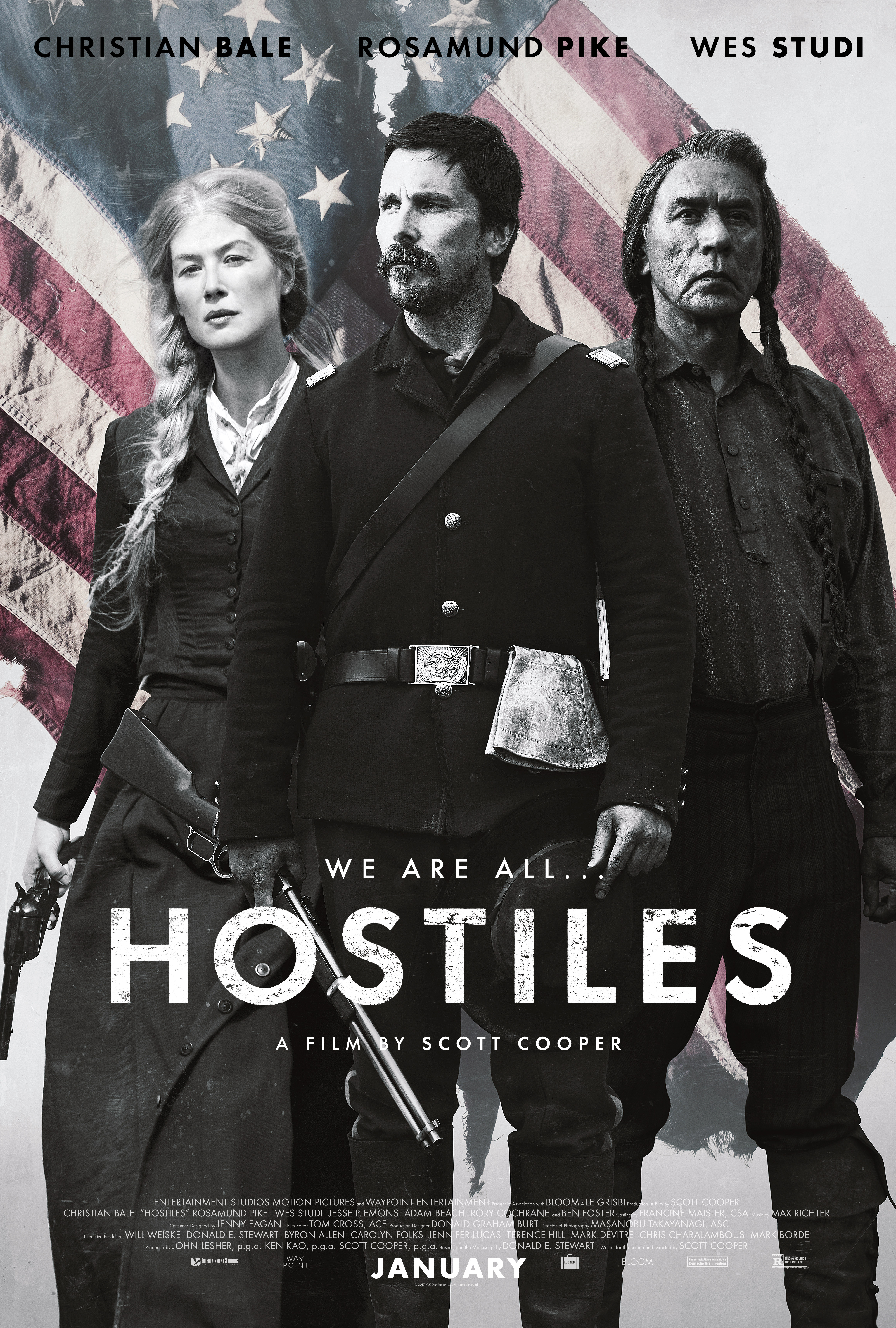
DIE FILM ‘HOSTILES’
Ek het onlangs die aangrypende film ‘Hostiles’ gekyk, dit speel af teen die agtergrond van die ‘Indian wars’ einde van die 19de eeu, die tragiese stryd tussen die ‘Amerikaanse pioniers’ en die ‘Amerikaanse Indiane’.
Hier is ‘n resensie wat die kerntemas van die film aanspreek (sal aanbeveel om eers die film te kyk, en dan die resensie te lees. Waarskuwing: dit is ‘n wrede film met heelwat geweldstonele, omdat dit ‘n oorlogsfilm is):
Total Depravity and Redemptive Hope in ‘Hostiles’
‘n Paar gedagtes wat ek byvoeg:
Die ‘good and bad guys’ is aan albei kante, almal veg onder mekaar en teen mekaar, en dalk die meeste, ‘met hul eie demone’, niemand ‘wen’ eintlik nie…. elkeen behoort eintlik begrip te hê vir die ander, vir wat hul gedoen het aan mekaar, vir goeie… maar ook slegte redes. Almal het ontsettende dinge beleef, hartseer wat hul probeer bedek deur slegs van die ‘ander’ die sondebokke te maak… en tog vind hul nie rus vir hul siele nie, wat is die sin agter dit alles, wat maak die mens met mekaar?
Wat is ook elke keer die politieke en sosiale magte agter die oorloë, of dit nou ‘liberales of/en konserwatiewes’ is, se agendas met die oorlog? Soek almal werklik vrede, of is oorlog die doel opsigself, heilig die doel, ‘my’ doel die middele, al is die middele sleg en selfvernietigend?
Dit is vrae wat mens vra tydens en na die film, waar trek mens die lyne in die ‘goeie stryd’ vir vryheid, vrede, om ‘n bestaan te maak… veral as gelowiges, ook in ons tye, en wat dalk in die toekoms vir ons voorlê hier in Afrika, vir al sy inwoners?
In die film gaan dit in die besonder hoe mense, die ‘oorwinnaars en verloorders’, optree teenoor mekaar, midde die tragiese gevolge van oorlog, moord en haat, en vrae oor die toekoms. Mens sien hoe ‘liefde en haat’ intens afspeel, hoe mens dit alles probeer ‘regverdig’, soekend midde ‘The Lord’s rough ways’ waardeur ons deur die lewe gaan.
Ons kan daaruit leer om te besin aangaande alle konflik wat vanaf die sondeval, in ons harte, maar ook dan (as gevolg daarvan) tussen mense onderling wat ironies, meer die ‘dieselfde’ is, as wat hul dink van die ‘ander’, maar ook en veral tussen verskillende groepe, volke, stamme en nasies, wat nog meer ‘anders’ is… en tog so eenders (sien Hand. 17:26, en dan Rom. 1-3, veral 3:19-20, en wat ons almal van alle volke, tale en nasies nodig het, 3:21-31…🙏)
Met die film, ongeag wie se kant jy kies, die kant of daardie kant, of … dalk geen kante nie? … partykeer kan ons net stil raak… en saam huil oor die verskriklike gevolge van ons sondige harte, en wat ons aan mekaar doen as beelddraers van God… party van ons wat dit dalk net in ons harte doen, en/of net woorde, maar (nog nie?) met die daad nie (sien die verklaring van die sesde tot tiende gebod, by HK Sondag 40-44)?
Ongeag met wie jy meer of minder medelye het, of jy saamstem of nie, oor hoe die film die verskillende groepe/standpunte oor die verlede aanbied, of dit ‘gebalanseerd en objektief’ genoeg is of nie … jy leer ten minste, of hoop mens: om die ‘anderkant’ baie beter (hopelik?) te verstaan (sonder om noodwendig saam te stem met hulle optrede), bv. waarom soldate aan beide kante van die oorlog, baiemaal ‘crack’ van so baie geweld en oorlog wat hul beleef het, hul vriende en family wat gely het, bose dade wat hul gesien het, wil ‘wraak’ neem, en dan self doen wat hul eintlik self haat en veroordeel in hul eie harte, teenoor ander en hul gesinne …. en ja, dan is ons maklik om sonder empatie te ‘veroordeel’ of af te keur, daar uit ons gemak stoele terwyl ons lekker veilig in ons huise gesit het, en ons jongmanne (‘wit en swart’) gesterwe het in oorloë….. dink bv. aan die Grensoorloë in ons geskiedenis in die 20ste eeu, en al die politieke probleme daarmee?
Kan ons sien dit is nie net ‘ons kant’ wat gesinne en geliefdes het en verloor nie, ook ‘ander’, en natuurlik, alhoewel die film vanuit wêreldse oogpunt beide die pioniers en indiane se gelowe aanbied en tentoonstel midde al die tragedie, en nie eksplisiet by Jesus Christus alleen as die enigste oplossing uitkom vir alle ‘rassehaat en volke konflik’ nie, in die film nog te veel vertrou op ‘your a good man… alles is in jou hande om te verander’, in plaas van almal op te kyk na Hom wat die enigste volkome ‘Good Man’ was en is vir ons redding en versoening, versoening met God en mekaar (Joh. 8:31,36; 14:6; 17:17; Hand. 4:12; 17:26-31; Gal. 3:28; Kol. 3:11)….
…. is die temas wel dat daar van vergifnis en ‘n gebroke maar hoopvolle toekoms (sien meer daaroor in die resensie hierbo, ook die kritiek wat die resent aan die einde gee), al is en gaan dit moontlik ‘n toekoms wees waarin ons nie altyd die Here se weë en planne verstaan nie, en die pad wat voorlê, soos een gelowige karakter noem, moet wees dat ons deur die Here se genade, wandel ‘deur die geloof’ (sien Hebr. 11) midde ‘The Lord’s rough ways’, ja, dalk nog baie stryd, bloed en trane wat kan voorlê, in tye van ‘oorlog én vrede’ (sien HK Sondag 9 en 10), totdat die volkomenheid sal kom met die wederkoms en voleinding, en Hy alles in al sy kinders onder al die volke in Hom sal wees, en daar absoluut geen meer sonde oorblyfsels sal wees nie.
“Toe die Here die lot van Sion verander het, was ons soos die wat droom. 2Toe is ons mond gevul met gelag en ons tong met gejubel; toe het hulle onder die heidene gesê: Die Here het groot dinge aan hierdie mense gedoen. 3Die Here het groot dinge aan ons gedoen: ons was bly! 4o Here, verander ons lot soos waterstrome in die Suidland. 5Die wat met trane saai, sal met gejubel maai. 6Hy loop aldeur en ween en dra die saadkoring; hy sal sekerlik kom met gejubel en sy gerwe dra” (Psalm 126)
Ja, en totdat daardie volkome vrede aanbreek wat nou ons verstand te bowe gaan, en daar geen meer oorlog is nie, het ons nog ‘n goeie stryd te stry, bo alles ‘n geestelike stryd, wat baiemaal ook baie fisies en werklik kan raak, mag ons as gelowiges dit doen met die oog op Christus (Hebr. 12:1-3)…
Die laaste toneel van die film laat mens met heelwat vrae, nie net oor die film se verhaal self nie, maar ook (en hier bely ek my eie besinning en hoop oor die einde van die film… wat ek graag daarin wil ‘inlees’ as metafoor, as boodskap vir die gelowige om te doen): dat elke mens opgeroep word om as’t ware op die ‘regte trein’ te klim, dat deur die Here se genade, daar vergifnis en genesing kan kom, die weg van bekering en geloof in die weg van waarheid en lewe wat in Christus alleen te vinde is (Joh. 14:6; Hand. 4:12), want ware bekering is om na gees en liggaam ‘om te draai’, rigting te verander, en te wandel in die geloof sonder dat ons ‘sien’, met die oog op die Onsienlike, in liefde tot God en … my naaste, lewenslange bekering (sien HK 2-4; HK 32).
ns. 1: Daar is ‘n YT weergawe gratis beskikbaar aanlyn, maar daar is nie die hulp van ‘Engelse of ander taal subopskrifte’ by dit nie, wanneer van die karakters ‘Indiaans’ praat nie, en baie belangrike deel van die film gemis word, kyk eerder ‘n weergawe waar die subtitels wel beskikbaar is.
ns. 2: daar is ‘n aanlyn YT resensie wat die film treffend beskryf in al sy aspekte, veral ook die filmkwaliteit in terme van direksie, natuurtonele, die wyse waarop verskillende karakters boodskappe oordra, ens. Maar omdat dit te veel ‘spoiler’s bevat, plaas ek dit nie hier nie, u kan my direk per whatsapp kontak (082 770 2669)om die skakel te ontvang, as u graag daarna wil kyk… soos ek aanbeveel, na u die film gekyk het.
RJ RUSHDOONY OOR DIE AMERIKAANSE INDIANE
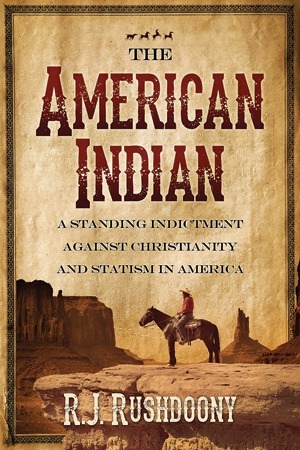 Nadat ek die ‘Hostiles’ film gekyk het, het ek bietjie gaan lees wat RJ Rushdoony geskryf het oor die onderwerp, ‘n hele boek (saamgestel uit sy artikels oor die onderwerp), waarin hy baie van die temas wat in die film na vore kom, treffend diepsnyend aanraak, vir beide ‘pionier en indiaan’ vra om self-ondersoek te doen.
Gelowiges moet vra, ongeag die ‘goeie of slegte politieke stelsels’ waarin ons ons bevind, hoe tree ek persoonlik konkreet op teenoor my naaste… ook self teenoor my grootste vyande, wat vra Christus, wat vra die Woord, wat maak ons met Matt. 7:12 as ek graag wil hê die wêreld moet weet van my eie volk se lyding, vervolging, die onreg teen ons, en, die soeke na vryheid en hoop… gun ek ook aan ander, wat ek vir my mense, gesin en volk gun … ook vir ander volke en mense wat ‘anders’ as ek is?
RJR se boek kan hier gratis aanlyn gelees word: https://chalcedon.edu/resources/books/the-american-indian
“Long before state health care or food stamps, before the creation of welfare ghettoes in our major cities, America’s first experiment with socialism and government dependency practically destroyed the American Indian.”
Hier is ook ‘n bespreking van sy boek:
https://chalcedon.edu/resources/audio/the-american-indian
Die audiobook kan hier geluister word: The American Indian
RJR het sendingwerk gedoen onder die ‘Shoshone and Paiute Indians’ in een van die Indiaanse reservate, en het dus eerstehandse ervaring van hul geskiedenis en lewens, van die onreg maar ook eie sondes, die feite en die mites wat gevolg het oor die ‘American Indians’. Hy wys veral hoe staatisme ook vernietigend ingewerk het op die Indiaanse stamme, staatisme wat sleg is vir alle groepe en volke, vandag nog (beklemtonings bygevoeg), hier is ‘n paar aanhalings:
“The American Indian is a standing indictment against the Christianity of this nation. Our Great Commission commands us to carry the gospel to all peoples. If we have so signally failed among the American Indians that, in the last sixty years, instead of winning more Indians to Christ, we have only half as many Christians as we had in 1890, it means that our witness and our example are very sorry ones. It is in a sense much easier to convert people to Christ who are halfway around the world from us because they see only our representatives—our missionaries—and do not see us. But the American Indian, tragically, sees not only the missionary but American Christianity itself, and his reaction to American Christianity is most negative.”
“To understand how all this came to be, let’s look at the history of the American Indian. It would be easy to paint a tragic story of the mistreatment of the American Indian, and it would be easy to do it with historical data. It would be very easy to go back into our Presbyterian historical society’s records and find stories of how Indians were deliberately inoculated with small-pox which killed them because they had no resistance to it, or were deliberately and systematically debauched so that they might be eliminated and their land taken over by the whiteman. But I think such stories would paint an unfair picture.
I think a much more honest and realistic picture has been given by one of the old Indians on the Owyhee Reservation in Nevada, where I served for eight and a half years (1944–1953). He said,
“We hear a lot of the people on the outside making a great to-do about the mistreatment of the Indians, and a lot of our own people are ready to tell such stories. But when you look at it honestly, this is the story:
‘The white man wanted what we had, our land, but he didn’t want us. We wanted what the white man had—his improvements, his guns, his modern conveniences—but we didn’t want him. And so we fought, each wanting what the other had but not wanting the other and trying to eliminate him; and we lost. That’s the story.’ “
Now that’s a candid, realistic Indian account of the situation.
Of course, it neglects one factor—that the white man in this situation was ostensibly a Christian.The conflict was a long, hard, and bitter one. The Indian fought from the beginning, and because he fought so strenuously for his freedom, there were many who said that the only thing that could be done with the Indian was to exterminate him—wipe him out.”
“It is also the story of an experiment that failed, disastrously—and exercise in statist paternalism and ineffective Christian meddling whose effects ravage the Indians to this day. The reservation system debased the people it was meant to serve, and the churches failed in their mission; until, in the end, the proud and resourceful Indian was transformed into “a defeated man, lacking in character.”
“This is Rushdoony’s eyewitness testimony to that failure. Today, as America’s leaders expand the welfare state and radically transform the entire nation, we’d do well to reconsider this first experiment in government dependency and a Christianity stripped of God’s law—before all of the United States is transformed into a massive reservation on a continental scale. Rushdoony’s description of our past is also an indictment of our statist future.”
‘n Paar verdere treffende aanhalings uit die boek:
“Both Indians and white apologists told me that Indian communalism made them indifferent to the idea of property ownership. If an Indian made this claim, another Indian said it was because he was a thief. There was indeed disrespect for private property because of envy and resentment of the superiority of others.”
“While we live in the world, and the best of us experience evil things, a persistent pattern of exploitation implies moral failure. The question is not one of racial inferiority; that is a humanistic myth. Christian faith and morality are necessary to progress against sin and exploitation. We are told, in 1 John 5:4, “For whatsoever is born of God overcometh the world: and this is the victory that overcometh the world, even our faith.”
I reminded Indian groups that when missionaries from the Near East and the Mediterranean world first moved into northern and Western Europe, they despaired at times that the barbarians they met could ever be made into a godly and law-abiding people. In Christ, however, in time they became the bulwark of Western and Christian culture—even as now, with-out Christ, they are returning to barbarism.”
Nota: sien veral hoofstuk 15, ‘The Invented Indian’, waar RJR wys op die probleem dat deur politiekery die ‘Amerikaanse Indian’ geskep is, terwyl hul eintlik ‘n verskeidenheid van groepe, stamme en tale was… ook soos hier in SA die ‘blank v swart’ geskep is in die 20ste eeu, terwyl daar eintlik baie verskillende volke in ons land is, sommige ‘swart’ ander ‘wit’ ens, bv. Afrikaners, Zoeloes, Xhosas, ens:
“Most people know, (or did a generation or two ago), that the peoples of the Americas were called Indians because Columbus thought he had reached India. At one time no American native considered himself an Indian: he was an Abinaki, a Cherokee, an Iroquois, an Aztec, Maya, Paiute, Shoshone, or some other kind of person. These peoples did not call themselves tribes. Like the term Indian, the word tribe was alien to them; it came from the Bible.
At present, the “American Indian” makes much of that term and uses it to promote special rights and privileges; but the term is part of the modern humanistic remaking of a people to fit into a worldview which idealizes “primitive peoples” and sees them as representing the best in human history.
…. The gratuitous assumption that all of the peoples of the Americas can be lumped under a common name is an unwarranted one and, in earlier years, gave some offense. It was comparable to calling a Frenchman or a Spaniard a German simply because a common continent and “whiteness” marked them. The Indians identified themselves in my days as Shoshone, Paiute, Pima, and so on, although amongst themselves, each saw themselves as ‘the people’.”
“In my day it was still white Christian America that was the norm. The Paiute or Shoshone might sometimes react against that norm, but he still recognized it as dominant. Since then, statist education has dramatically altered and remade white and black Americans and Indians as well. The humanistic view of the “primitive Indian”and the ideas of Rousseau have reshaped the Indian image of himself and his past. Consequently, all groups in America are guilty of mythical thinking about themselves and about one another.”
Hoofstuk 17: The Fallacy of Primitivism
“Our thinking about various peoples too often begins with an illusion. We divide them into “primitive” and “civilized” peoples, with some gradations between them. The actual difference is moral and religious. Darwinism has seriously warped our views of people.”
“In Biblical law, marriage with unbelievers is forbidden as treason to the covenant (Deut. 7:3, Ex. 34:12–16). Marriage with a believer from an evil and debased people was possible, but the descendants of such a union could not “enter into the congregation,” i.e., become officers or leaders unto the third or even the tenth generation, depending on the moral and religious background of the convert’s culture.
An example of such a marriage is Ruth and Boaz. Ruth was honored and respected, but it was only with David that the exclusion ended insofar as authority was concerned. The problem was not racial; it was moral and religious. The Indians were not “primitive” peoples. They were morally and religiously decadent, and the same can be said for all the European and other advanced peoples at one stage or another in their history. Certainly, the culture of Western man is moving downhill towards the Polynesian level described by Suggs.”
Hoofstuk 20: Improving the morals of the past
“The imaginary Indian of many Americans’ thinking is an environmentalist, a natural philosopher, and a worshipper of the “Great Spirit.” All of this is nonsense. I remember, in the 1940s, seeing some younger Indians spouting these ideas cruelly mocked as fools by their elders. But well before that time, more than a few people were “writing down” the tales of elderly Indians and making them sound like superb environmentalists and gentle souls. Many white champions of the Indian will speak in detail of the white man’s sins against the Indians—that is, the crimes of his ancestors. People who are prone to confessing the sins of their forebears rather than their own are consummate Pharisees and hypocrites.”
“Too much is written of the Indian-white wars. They were not as prevalent as is commonly assumed. Far more common was warfare among tribes, and the white man’s help was frequently sought by one side or another.”
“There was no lack of brutality, in peace and in war, by whites and Indians against one another; but there were also, from the beginning, acts of kindness, help, and friendships. But these are ignored because the concern of many is with the oppression of the Indians. Once, when I cited an instance ofthe helpfulness of some Indians to whites, my remarks were dismissed and I was told that such Indians were fools and renegades.”
“My family, Armenian immigrants, settled in 1916 in a small California farming area. I recall incidents of night time vandalism and broken windows and of aggression against me at school. There were also acts of kindness from churches and many neighbors. Such stories have never been one-sided for any group.
Today, our family includes, by marriage, several nationalities. It is false history to give only a negative view of America’s treatment of minorities. Man is a sinner. There is no perfection in this life. We do ourselves and others no good by stressing victimhood. Many good families have trouble living together in peace. Is it any wonder that they resent or dislike peoples who are alien to them? Men are not sinless. Conflicts are commonplace, but it does not help our future to accentuate evils and conflicts instead of working for peace and goodwill. There is no virtue in confessing our ancestors’ sins when we are so wanting in grace and mercy day by day. We have become a coarse people, wanting in many areas but adept at confessing sins committed by our ancestors and by other peoples.”
“Finally, any complaining Indian should be firmly told,
“Your old song that the white man stole the land from you is out of date. We are giving it back to you with more privileges, more opportunity, and more freedom than your ancestors enjoyed. But in order to hold any of these, you will have to work and compete for them even as your forefathers did before they ever saw us. Our best payment of our debt to you is not the money that some of you hanker for, but the full freedom of American citizenship; nothing will give you more returns. We are offering you the status of a man.” In no other way can the ancient wrongs be righted, and we have no right to withhold from the Indian that for which silent millions of the world hunger.”
“The basic problem today in the American Indian missions is our problem, too. Are we going to live our faith? What we do to the American Indian today and tomorrow depends on what we ourselves do. This will mark the extent to which we believe our faith, the extent to which we are willing to be Christians when it means putting ourselves out and being uncomfortable, making sacrifices of our personal privacy, our personal liberty, or our personal convenience for the sake of Jesus Christ. We have forgotten what Christian hospitality means. The Indian recognizes this lack, and so the American Indian today constitutes a standing indictment against American Christianity. What are we going to do for the American Indian? How are we going to meet our responsibility to Jesus Christ?”
Laastens:
‘n Opmerking en vraag vir elke gelowige van elke volk, stam, taal en nasie. Nee, nie net ‘wit teenoor swart’ nie, maar ook ‘swart teenoor wit’ en al die verskeidenheid groepe en ‘kleure’ onder mekaar:
Ten einde gaan dit sentraal nie oor my of my volk se eer en bestaan nie, maar bo alles juis oor God se eer, sy wet en evangelie, sy Naam wat ge-eer moet word onder alle volke (Ps. 117; Op. 5:9), of hoe, of is ons besig met ander agendas wat belangriker is?
En as ons genadiglik glo, dat die Naam van God moet geken (Joh. 17:3) en ge-eer word onder alle volke, en in alle tale en nasies, dan kom die vraag opnuut konkreet werklik, nie net vir die ewigheid nie, maar vir hier en nou, as dit gaan oor grond, land, taal, kultuur, plek, ruimte, ens., of ons Christus, ons Verlosser en Koning ook in al ons politieke planne volg, vir onsself en ander:
“Alles wat julle dan wil hê dat die mense aan julle moet doen, net so moet julle aan hulle ook doen; want dit is die wet en die profete.” (Matt. 7:12)
_____________________________________
Meer oor Rushdoony en Chalcedon hier.
Pro Regno artikels van en oor RJ Rushdoony hier.
 PRO REGNO
Leave a comment