THE SOLA FIDE (by faith alone) OF THE REFORMATION CONFESSIONS
ARE CLEARLY TAUGHT IN SCRIPTURE
“If we lose the doctrine of justification, we lose simply everything.” – Maarten Luther
“Justification by faith is the hinge on which all true religion turns.” – John Calvin
“It is on this doctrine of justification as consisting in sanctification and renewal, the infusion of righteousness and sanctifying grace, that the polemic of Rome turns, and it is preeminently at this point that the issue between the Romish and Protestant positions must be joined. If anything has been demonstrated by the foregoing study of the usage both in the Old Testament and in the New it is that justification is a term of forensic import and refers to the judgment conceived and registered with reference to judicial status. … the crux of the controversy would still be the question of infused
righteousness (Rome’s view – slc) versus the vicarious and imputed righteousness of Christ (Reformation view -slc). However, Rome is adamant in her insistence that justification is to be defined as consisting in sanctification and renewal, the impartation of sanctifying grace, after the pattern of the decrees of Trent.” – John Murray
A Roman Catholic asked me where is the ‘sola fide’ of the Reformation from Scripture?
Now firstly, the Reformers since the 16th century explained the truth of ‘sola fide’ biblical truth over and over again from Scripture (see both Luther’s and Calvin’s Romans and Galatians commentaries, see Calvin’s commentary below Rom. 3:28), and many modern Roman Catholics are just ignorant about it, do not care to read it, or if they did, don’t accept the explanations for 5 centuries now, because it means they have to revoke all the ‘anathemas’ of Trent against ‘sola fide’ (see the previous article on this topic here).
So yes, unless God sends repentance, they won’t understand or believe it, the best we can do is to pray for them that their eyes open to the true Gospel according to Scripture, as revealed in justification by faith… alone.
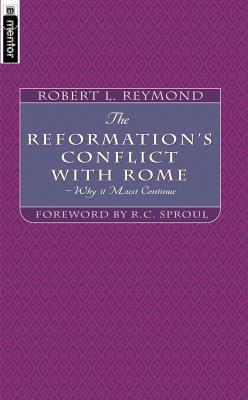
See also dr. L. Robert Reymond’s book, The Reformation’s Conflict with Rome: Why it must Continue!, specifically p. 98-122 where he explains the big difference between Rome’s ‘And’s’ and the Reformation’s ‘Alone’s’ (sola’s) from Scripture.
But we must keep on praying and explaining (2 Tim. 4:1-5), so, secondly, here is another short explanation from Romans 3 and 4 on how the Scriptures reveals ‘sola fide’, maybe it will help someone:
Read prayerfully: Romans 3:19 – 4:11
Romans 3:28, “27 Where is boasting then? It is excluded. By what law? Of works? No, but by the law of faith. 28 Therefore we conclude that a man is justified by faith apart from the deeds of the law.”
1) The immediate context reveals the ‘sola’ truth: v. 27… law/works (what man does…) are excluded in justification, the ‘No’ excludes ‘works’, which means then… by faith… alone, we justified based on Christ’s righteousness alone that was graciously revealed ‘apart’ from the law/works (3:21,22).
2) Verse 28 itself reveals the ‘sola’ truth: v. 28a ‘justified by faith’ stands in contrast to v. 28b ‘deeds of the law’ (works), with the preposition or adverb ‘apart’ (Greek: choris), which according to Greek dictionaries and grammars mean: ‘without, not with, separate, no relationship to, independent of’, a ‘marker of dissociation’, ‘by itself’ = sola, alone!
3) In other words: the phrase ‘justified by faith’ stands alone as the ground and source of justification, not ‘faith plus works/law’, and in ‘contrast’ of the phrase that follows after ‘apart’ (choris), i.e. ‘deeds of the law’ (works), and that means therefore nothing else than ‘alone’ phrase, verse 28a ‘alone’, not v. 28a ‘and’ v. 28 saves, it is v. 28a alone ‘sola’, that is the whole meaning of the whole verse in its context and in its own words = sola fide.
4) Cambridge Dictionary: synonyms for the word ‘apart (Gr. choris)’ in the English language: “aside, to one side, by oneself, by itself, alone, aloof isolated, separate, cut off, divorced.”
Yes, ‘apart’ also mean = alone = sola.
5)Argument from the Trinitarian doctrine: The Roman Catholic Church believe (with Protestant Churches wholeheartedly and truly), in the Trinity as revealed in Scripture (see for instance Rome: Catechism of the RCC, 261-267, and Protestants, Belgic Confession articles 8,9). In Rome’s Catechism it states, with reference to Matthew 28:19, as follows: “265 By the grace of Baptism “in the name of the Father and of the Son and of the Holy Spirit”, we are called to share in the life of the Blessed TRINITY, here on earth in the obscurity of faith, and after death in eternal light.”
6) Now, we read no ‘Trinity’ term or word in Matthew 28:19 (or all other Bible text through Scripture as source of the doctrine of the Trinity), but the truth is there, that is the ‘sense of Scripture’, what we call ‘Trinity’ or ‘God Triune’ (as both Rome and Protestants confess: “And the catholic faith is this: that we worship one God in Trinity, and Trinity in Unity; neither confounding the Persons, nor dividing the Essence.” – Athanasian Creed, see Belgic Confession article 9, last paragraph). The Trinitarian doctrine and truth is very clear for all to see in what Matt. 28:19 reveals (and all other related verses), and we Protestant confess it also, see HC Sunday 8. Amen.
7) BUT, THAT IS THE SAME with the essential biblical truth of ‘faith alone’ in Romans 3:28, it is all very clear for believers to see, that Romans 3:28 (and other related verses: Rom. 3:21, 22; 4:6; 5:19; 8:28-39; 11:6; 2 Kor. 5:21; Gal. 2:16; Phil. 3:9; 2 Tim. 1:8,9; Tit. 3:4-7; Hebr. 1:3; 10:12-18, etc.), teach through faith ‘alone’, through ‘grace alone’, in ‘Christ alone’. The exact word or phrase ‘alone’ does not stand their, but the truth is there, and that is what the ‘apart’ teach:
21 But now the righteousness of God apart from the law is revealed, being witnessed by the Law and the Prophets, 22 even the righteousness of God, through faith in Jesus Christ, to all and on all who believe.” (Rom. 3:21,22)
And see how very clear is the Apostle Paul after he taught ‘justification by faith alone’, without any works (yes including any good works given by God’s grace for us to do, Eph. 2:10) we can do, in Rom. 4:1-8:
“What then shall we say that Abraham our father has found according to the flesh? 2 For if Abraham was justified by works, he has something to boast about, but not before God. 3 For what does the Scripture say? “Abraham believed God, and it was accounted to him for righteousness.” 4 Now to him who works, the wages are not counted as grace but as debt. 5 But to him who does not work but believes on Him who justifies the ungodly, his faith is accounted for righteousness, 6 just as David also describes the blessedness of the man to whom God imputes righteousness apart from works: 7 “Blessed are those whose lawless deeds are forgiven, And whose sins are covered; 8 Blessed is the man to whom the Lord shall not impute sin.”
Here in Romans 4, following 3:21-28, it is so very clear: justification is not both what God does in Jesus ‘and’ in or through the believer (Abraham, David, etc.), because then ‘we’ can boost and then it is no ‘grace alone’ and glory to God alone for all and especially our salvation.
Therefore we read in Matt. 1:21 and Hebr. 1:3, not that Christ only ‘by grace’ started or make justification ‘possible’ for people, that justification is therefore a process or co-work between God and man that ‘maybe’ will become perfect (‘by so-called grace’ of course, add the false gospels of Rome and Arminianism), but that He died surely for his children’s sins once and for all, the ‘It is finished’ sola fide Gospel of Scripture as stated in the Reformed Confessions about ‘justification by faith alone’:
3 (Jesus) being the brightness of His glory and the express image of His person, and upholding all things by the word of His power (the Person of Christ – slc), when He had by Himself purged our sins, sat down at the right hand of the Majesty on high.” (the work of Christ – slc) (Hebr. 1:3)
10 By that will we have been sanctified through the offering of the body of Jesus Christ once for all. 11 And every priest stands ministering daily and offering repeatedly the same sacrifices, which can never take away sins. 12 But this Man, after He had offered one sacrifice for sins forever, sat down at the right hand of God, 13 from that time waiting till His enemies are made His footstool. 14 For by one offering He has perfected forever those who are being sanctified.” (Hebr. 10:10-14)
Now, see also the very important truth in this Scripture, confirming that the Reformation is not over, that we should keep on hoping and praying that Rome will repent from their false gospel and embrace the true sole fide Gospel of the Scriptures as confessed in the Reformed Confessions, for this very important reason:
Hebrews 1:3 (and also the whole of the book and rest of Scripture) reveals we can never divide the Person and work of Christ, we distinguish, but not divide in the sense that the Person is very important and essential, but His works not so much, etc.
No, not only the Person of Christ, but also the works of Christ is essential for our salvation and the glory of God; not only the Person of Christ as revealed in Scripture and confessed in the early ecumenical creeds (Apostles, Nicea, Athanasius of the 2-5th centuries, which Protestants and Rome confess in unity), but also the Reformed Confessions (for instance the Dordt and Westminister Standards of the 16/17th centuries) about the works of Christ, especially about the work of salvation by Christ alone (solus Christus) that we received by grace through faith alone (sola fide sola gratia), all to the glory of God alone (soli Deo Gloria), is essential and non-negotiable for all believers and all true churches of Jesus Christ. Therefore we must hold to Scripture alone (sola Scripture) about all it teach about the Person and Work of Jesus Christ, our only Saviour, our only Mediator, our only Truth.
Justification is Christ’s works and Christ’s works alone ‘accounted’ or ‘imputed’ to those who are saved, and therefore justification is a forensic declarative act by God alone, which we then receive as sinners and beggars by faith, Rom. 4:8.
Christ’s righteousness, His perfect work alone (not our holiness that are also given to us by grace, see BC article 24), are ‘imputed’ … see in verse 6 of Romans 4: “apart from works”
Therefore, with David we can call out in thanksgiving: “Blessed are those whose lawless deeds are forgiven, And whose sins are covered; 8 Blessed is the man to whom the Lord shall not impute sin.”
God ‘imputes’ Christ’s righteousness, and His righteous (the only righteousness that was and ever will be without any spot or blemish) alone (sola) to us, and we reveive it by faith alone (not ‘our holy works, not ‘our sanctification’ which are also of grace, Eph. 2:10, but not perfect: “But we are all like an unclean thing, And all our righteousnesses are like filthy rags;
We all fade as a leaf, And our iniquities, like the wind, Have taken us away, Is. 64:6)
This is also the Gospel as explained further in Romans 8:1, 31-34: the imputation of Christ active and passive obedience for us, and therefore Rome’s false gospel of justification of faith (Christ work for us) and works (in us) = synergism) is not only false, but gives no comfort at all. But the sole fide gospel gives so much comfort, as we confess in Heidelberg Catechism Sunday 23 so beautifully:
-
-
Q. 59. But what doth it profit thee now that thou believest all this?
A. That I am righteous in Christ, before God, and an heir of eternal life.1 -
Q. 60. How art thou righteous before God?
A. Only (sola!) by a true faith in Jesus Christ;2 so that, though my conscience accuse me that I have grossly transgressed all the commandments of God, and kept none of them,3 and am still inclined to all evil;4 notwithstanding, God, without any merit of mine,5 but only (sola!) of mere grace,6 grants7 and imputes to me8 the perfect satisfaction, righteousness, and holiness of Christ;9 even so, as if I never had had nor committed any sin: yea, as if I had fully accomplished all that obedience which Christ has accomplished for me;10 inasmuch as I embrace such benefit with a believing heart.11 -
Q. 61. Why sayest thou that thou art righteous by faith only?
A. Not that I am acceptable to God on account of the worthiness of my faith,12 but because only (sola!) the satisfaction, righteousness, and holiness of Christ is my righteousness before God;13 and that I cannot receive and apply the same to myself any other way than by faith only.14
-
-
-
Rom. 5:1. Rom. 1:17. John 3:36. 2. Rom. 3:22ff. Gal. 2:16. Eph. 2:8, 9. 3. Rom. 3:9ff. 4. Rom. 7:23. 5. Rom. 3:24. 6. Tit. 3:5. Eph. 2:8, 9. 7. Rom. 4:4, 5. 2 Cor. 5:19. 8. Rom. 4:4. 9. Rom. 3:24, 25. 10. 2 Cor. 5:21. 11. Rom. 3:28. John 3:18. 12. Psa. 16:2. Eph. 2:8, 9. 13. 1 Cor. 1:30. 1 Cor. 2:2. 14. 1 John 5:10.
-
Because Scripture clearly teach that those who are justified stays justified forever (Rom. 8:29, 30; John 10:28), because He said Himself: ‘It is finished’, not something we can add or must add, other than a thankful life according to His good laws, we can with Paul, be glad in the Gospel alone, as he declares it in Romans 8:
Romans 8:1 There is therefore now no condemnation to those who are in Christ Jesus, who do not walk according to the flesh, but according to the Spirit. …. 28 And we know that all things work together for good to those who love God, to those who are the called according to His purpose. 29 For whom He foreknew, He also predestined to be conformed to the image of His Son, that He might be the firstborn among many brethren. 30 Moreover whom He predestined, these He also called; whom He called, these He also justified (‘He’ = sola gratia… solus Christus); and whom He justified, these He also glorified. 31 What then shall we say to these things? If God is for us, who can be against us? 32 He who did not spare His own Son, but delivered Him up for us all, how shall He not with Him also freely give us all things? 33 Who shall bring a charge against God’s elect? It is God who justifies. 34 Who is he who condemns? It is Christ who died, and furthermore is also risen, who is even at the right hand of God, who also makes intercession for us. 35 Who shall separate us from the love of Christ? Shall tribulation, or distress, or persecution, or famine, or nakedness, or peril, or sword? 36 As it is written: “For Your sake we are killed all day long; We are accounted as sheep for the slaughter.” 37 Yet in all these things we are more than conquerors through Him who loved us. 38 For I am persuaded that neither death nor life, nor angels nor principalities nor powers, nor things present nor things to come, 39 nor height nor depth, nor any other created thing, shall be able to separate us from the love of God which is in Christ Jesus our Lord.”
Because we perfectly justified once and for all by our final High Priest, Jesus Christ (Rom. 6:10; Hebr. 7:27; 9:12; 25-28; 10:10-14; 1 Pe. 3:18), therefore we shall never be seperated from God and Christ (John 10:28), therefore all the fruits of justification are ours, Christ is our ‘righteousness and sancatification’ to God’s glory alone:
“29 that no flesh should glory in His presence. 30 But of Him you are in Christ Jesus, who became for us wisdom from God—and righteousness and sanctification and redemption— 31 that, as it is written, “He who glories, let him glory in the Lord.” (1 Cor. 3)
To Him be the glory now and forever, that is the true Gospel.
In summary:
The Gospel, justification is not a ongoing process, it not something God has just begun, and now we must ‘with the help of God’s grace and Jesus’ continue in that to get final justification, we reject with Scripture Roman Catholic’s synergistic ideas of justification, a combination of what God done ‘in Christ’ and also ‘in believers’ (see prof. John Murray’s article: The Romish doctrine of Justification, here).
No cries of ‘but it is all of grace’ what God does ‘in me’ and therefore ‘my works is part of the Gospel’, will change Rome’s false gospel, which is in contrast to Paul’s Gospel, which was from God (see Rom. 1:1-5), but Rome’s gospel is ‘according to man’, dependant on man working ‘together for the Gospel’ (Gal. 1:11).
No, justification is wat God has done in Christ alone, and then the fruit by the Spirit is what follows justification, our faith, sanctification, a life of thankful good works, etc, see Belgic Confession article 24.
Therefore Romans 3:31 after sola fide has been explained:
31 Do we then make void the law through faith? Certainly not! On the contrary, we establish the law.
At best, Rome confuses and mix up justification and sanctification, which lead to a gospel of faith and works, a Gospel of God and man, not the Gospel of Scripture alone, grace alone, faith alone, to His glory alone.
9. Luther’s German translation was correct in terms of the meaning of the verse, because ‘allein’ (alone) truth are taught in Romans 3:28, as explained above: “So halten wir nun dafür, daß der Mensch gerecht werde ohne des Gesetzes Werke, allein (alone/sola) durch den Glauben.”
See these articles explaining Luther’s ‘allein’ (alone):
https://beggarsallreformation.blogspot.com/2006/02/luther-added-word-alone-to-romans-328.html
10. The ‘Alone’ in two articles of the Reformed Confessions (capital letters added where the ‘sola’ truth is confessed as taught in Scripture):
Belgic Confession Article 22 – Our Justification Through Faith in Christ
“We believe that, in order that we may obtain the true knowledge of this great mystery, the Holy Spirit kindles in our hearts a true faith.1 This faith embraces Jesus Christ with all his merits, makes him our own, and does not seek ANYTHING besides him.2 For it must necessarily follow, either that ALL we need for our salvation is not in Jesus Christ or, if it is all in him, that one who has Jesus Christ through faith, has COMPLETE salvation.3 It is, therefore, a terrible blasphemy to assert that Christ is not sufficient, but that something else is needed besides him; for the conclusion would then be that Christ is only half a Saviour.
Therefore we rightly say with Paul that we are justified by faith APART from works of the law (Rom 3:28).4 Meanwhile, strictly speaking, we do not mean that faith as such justifies us,5 for faith is only the instrument by which we embrace Christ our righteousness; he imputes to us all his merits and as many holy works as he has done FOR US AND IN OUR PLACE.6 Therefore Jesus Christ is our righteousness, and faith is the instrument that keeps us with him in the communion of all his benefits. When those benefits have become ours, they are more than sufficient to acquit us of our sins.”
1 Jn 16:14; 1 Cor 2:12; Eph 1:17, 18
2 Jn 14:6; Acts 4:12; Gal 2:21
3 Ps 32:1; Mt 1:21; Lk 1:77; Acts 13:38, 39; Rom 8:1
4 Rom 3:19-4:8; 10:4-11; Gal 2:16; Phil 3:9; Tit 3:5
5 1 Cor 4:7
6 Jer 23:6; Mt 20:28; Rom 8:33; 1 Cor 1:30, 31; 2 Cor 5:21; 1 Jn 4:10
Belgic Confession article 23 – Our Righteousness Before God
“We believe that our blessedness lies in the forgiveness of our sins for Jesus Christ’s sake and that therein our righteousness before God1 consists, as David and Paul teach us. They pronounce a blessing upon the man to whom God reckons righteousness APART from works (Rom 4:6; Ps 32:1). The apostle also says that we are justified by His grace as a gift, through the redemption which is in Christ Jesus (Rom 3:24).2
Therefore we always hold to this firm foundation. We give ALL the glory to God,3 humble ourselves before Him, and acknowledge ourselves to be what we are. We do not claim anything for ourselves or our merits,4 but rely and rest on the ONLY obedience of Jesus Christ crucified ALONE;5 His obedience is ours when we believe in Him.6
This is sufficient to cover ALL our iniquities and to give us confidence in drawing near to God, freeing our conscience of fear, terror, and dread, so that we do not follow the example of our first father, Adam, who trembling tried to hide and covered himself with fig leaves.7 For indeed, if we had to appear before God, relying – be it ever so little – on ourselves or some other creature, (woe be to us!) we would be consumed.8 Therefore everyone must say with David, “O LORD, enter not into judgment with Thy servant, for no man living is righteous before Thee” (Ps 143:2).
1 1 Jn 2:1 2 2 Cor 5:18-19; Eph 2:8; 1 Tim 2:6 3 Ps 115:1; Rev 7:10-12 4 1 Cor 4:4; Jas 2:10 5 Acts 4:12; Heb 10:20 6 Rom 4:23-25 7 Gen 3:7; Zeph 3:11; Heb 4:16; 1 Jn 4:17-19 8 Lk 16:15; Php 3:4-9
Note on Paul en James on ‘faith and works’
Rome has kicked up a lot of dust by claiming that James 2:14-26 teaches that ‘faith plus works’ saves us, but there has always been a simple clear answer to that, Calvin in his commentary of Romans 3:28 explains it clearly as follows (emphasis added):
Romans 3:28. We then conclude, etc. He now draws the main proposition, as one that is incontrovertible, and adds an explanation. Justification by faith is indeed made very clear, while works are expressly excluded. Hence, in nothing do our adversaries (Rome – slc) labor more in the present day than in attempts to blend faith with the merits of works. They indeed allow that man is justified by faith; but not by faith alone (sola fide); yea, they place the efficacy of justification in love, though in words they ascribe it to faith. But Paul affirms in this passage that justification is so gratuitous, that he makes it quite evident, that it can by no means be associated with the merit of works. Why he names the works of the law, I have already explained; and I have also proved that it is quite absurd to confine them to ceremonies. Frigid also is the gloss, that works are to be taken for those which are outward, and done without the Spirit of Christ. On the contrary, the word law that is added, means the same as though he called them meritorious; for what is referred to is the reward promised in the law.
What, James says (James 2:14-26 – slc), that man is not justified by faith alone, but also by works, does not at all militate against the preceding view. The reconciling of the two views depends chiefly on the drift of the argument pursued by James. For the question with him is not, how men attain righteousness before God, but how they prove to others that they are justified, for his object was to confute hypocrites, who vainly boasted that they had faith. Gross then is the sophistry, not to admit that the word, to justify, is taken in a different sense by James, from that in which it is used by Paul; for they handle different subjects. The word, faith, is also no doubt capable of various meanings. These two things must be taken to the account, before a correct judgment can be formed on the point. We may learn from the context, that James meant no more than that man is not made or proved to be just by a feigned or dead faith, and that he must prove his righteousness by his works. See on this subject my Institutes.”
See especially the context of James 2 so clearly revealing what James are writing about and how he use the word ‘justified’:
18 But someone will say, “You have faith, and I have works.” Show me your faith without your works, and I will show you my faith by my works. …. 24 You see then that a man is justified by works, and not by faith only.”
Works testifies, confirm, proves, reveals, shows that someone was and is justified by faith in Christ’s works alone, as taught by Paul in Romans 3 and 4. Works, what man does and must do, are not any part or source or co-worker of us being saved, and righteous in God’s sight, it is Christ’s works alone that saves as, and then the fruit thereof is, “faith working through love”, Gal. 5:4, “Through Him we have received grace and apostleship for obedience to the faith … The just shall live by faith.”, Rom. 1:5,17; “….just as He chose us in Him before the foundation of the world, that we should be holy and without blame before Him in love”, Eph. 1:4
8 For by grace you have been saved through faith, and that not of yourselves; it is the gift of God, 9 not of works, lest anyone should boast. 10 For we are His workmanship, created in Christ Jesus for good works, which God prepared beforehand that we should walk in them. (Eph. 2:8-10)
______________________
Verdere bronne om te raadpleeg:
Sola Fide in the Church Fathers
“In the end, are these quotes a silver bullet? Absolutely not. Do Roman Catholics have a response to these? I’m certain of it. Yet, it is undeniable that Sola Fide is found in prototypical form in the Church Fathers. This confirms that the Reformers were truly continuing the legacy of those who came before them. Rather than anything novel or innovative, Sola Fide has been part and parcel of the Christian faith from the time of Adam to Noah to Abraham to Moses to David to the Prophets to our Lord and his Apostles to the Early Church—and this rich and ancient belief continues to this day. May God, therefore, grant us the faith that leads to eternal life!”
Regverdiging deur die geloof alleen, Calvyn
“Ons neem dus aan … Nou oordink hy die vernaamste tema asof dit reeds sonder twyfel is, en voeg ’n verklaring by. Die geregtigheid van die geloof kom immers duidelik aan die lig wanneer die werke by name uitgesluit word. Daarom arbei ons teenstanders vandag in geen saak harder as om die geloof met die verdienstelikhede van die werke te verstrengel nie. Hulle gee wel toe dat die mens deur die geloof geregverdig word, maar nie deur die geloof alleen.
Ja, as dit op die saak self aankom, plaas hulle die krag van die regverdigmaking in die liefde, hoewel slegs met woorde wat hulle aan die geloof toeskryf. Maar Paulus verseker op hierdie plek dat dit (die regverdigmaking) so onverdiend is, dat hy openbaar maak dat dit op geen manier met enige waardigheid van die werke verbind kan wees nie. Waarom hy die werke van die wet noem, het ek hierbo verduidelik en tegelykertyd aangetoon dat hulle wat dit tot die seremonies beperk, belaglik is. Dit is ook ’n onbeduidende versinsel om die werke van die wet letterlik op te neem as werke wat sonder die Gees van Christus gedoen word. Hierdie bepaling het eerder soveel betekenis asof hy verdienstelike werke sou gesê het, omdat hy let op die loon wat in die wet beloof is.
Dit wat by Jakobus gevind word (Jak. 2:14-26 – slc), dat die mens nie alleen deur die geloof geregverdig word nie maar ook deur werke, stry geensins met die voorgaande uitspraak nie. Die versoening (van die twee sieninge) hang grotendeels af van die strekking van die argument waaroor Jakobus daar handel. Die vraag by hom is immers nie op watter manier mense vir hulself geregtigheid voor God verwerf nie, maar op watter manier hulle hul regverdigheid bewys. Hy weerlê dus die geveinsdes wat ydelik spog met die titel van geloof. Dit is derhalwe ’n ernstige denkfout om nie aandag daaraan te skenk nie dat die uitdrukking om te regverdig by Jakobus iets anders beteken as by Paulus, soos wat hulle ook oor verskillende sake handel. Die woord geloof kom ook sonder twyfel in verskillende betekenisse voor. Om ’n oordeel oor die saak te vel, moet die tweevoudige homoniem in ag geneem word. Uit die sinsverband moet afgelei word dat Jakobus niks anders wil sê nie as dat die mens nie deur ’n geveinsde of dooie geloof regverdig gemaak of regverdig bewys word nie, behalwe as hy sy geregtigheid deur werke bewys. Kyk hieroor my Institusie.” – Calvyn se kommentaar by Romeine 3:28, met verwysing en vergelyking met Jak. 2:24
Regverdiging deur die geloof alleen, A. Stewart
Regverdiging deur die geloof alleen en die gevolge daarvan, F. de Wet
“Reeds in 1857 het Keryx, ‘n goed geleerde predikant, in die tydskrif Elpis die metodistiese leer verkondig dat die regverdiging van die sondaar eintlik in sy regverdigmaking bestaan. Soos u weet, leer die Gereformeerdes juis die teenoorgestelde, naamlik dat die regverdiging bestaan in die regverdigverklaring van die sondaar deur die hemelse Regter. Keryx weet self dat die Heidelbergse Kategismus die regverdiging as ‘n regterlike en nie ‘n sedelike daad van God beskou nie. Maar dan skroom hy darem nie om vraag 60 en artikel 22 van ons Geloofsbelydenis as „minder Skriftuurlik” te brandmerk nie. – Totius
“At the heart of the division between Protestants and Catholics is the disagreement over the doctrine of justification. According to Catholic theology, justification is believed to be a lifelong process in which the sinner becomes intrinsically righteous, to the extent that he or she cooperates with grace. On the other side, Protestants assert that this ends up confusing justification with sanctification. Whereas sanctification is a process, justification is a once-for-all declaration of right standing with God that is ultimately rooted in Christ’s perfect righteousness. On this program the hosts walk through all the issues involved in this historic debate.” – Understanding the Protestant / Catholic Divide
Sien die volgende artikels en bronne om verder te lees oor die Reformasie teenoor Rome:
Die Bybelse Evangelie: verloor deur Rome, herontdek deur die Reformasie
Greg Bahnsen: The Reformation and Rome
“In this audio, Greg Bahnsen defends the necessity of the Reformation over and against ecumenical twentieth century dialogues between Protestants and Catholics. In many respects, this audio is a precursor to the Evangelical and Catholics Together (i.e., ECT) dialogues and statements and present-day statements such as the Manhattan Declaration, both of which, affirm an ecumenical approach to Protestantism and Roman Catholicism.”
“In Are We Together? A Protestant Analyzes Roman Catholicism, R.C. Sproul takes his stand for the cardinal doctrines of Protestantism in opposition to the errors of the Roman Catholic Church. Sproul, a passionate defender of the gospel of justification by grace alone through faith alone in Christ alone, cites the historic statements of the Protestant Reformers and the Roman Catholic authorities, then references modern doctrinal statements to show that the Roman Catholic Church has not altered its official positions. In light of this continuing gap, he writes, efforts by some in the evangelical camp to find common ground with Rome on matters at the heart of the gospel are nothing short of untrue to biblical teaching. In Sproul’s estimation, the Reformation remains relevant.”
Roman Catholicism’s Recent Claim That It Is the True Church
Acts of the Council of Trent with the Antidote, John Calvin
Verdere bronne oor die Hervorming
– Heidelbog recommended sources: Roman Catholicism
Resources On Roman Catholicism
Video om te kyk: An Earnest Plea to Roman Catholics
 PRO REGNO
Leave a comment