On Discerning Who Belongs to the True Church, by John Calvin (Sermon on Gal. 4:26-31)*
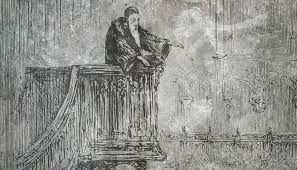
“But Jerusalem which is above is free, which is the mother of us all. For it is written, Rejoice, thou barren that bearest not; break forth and cry, thou that travailest not: for the desolate hath many more children than she which hath an husband. Now we, brethren, as Isaac was, are the children of promise. But as then he that was born after the flesh persecuted him that was born after the Spirit, even so it is now. Nevertheless what saith the scripture? Cast out the bondwoman and her son: for the son of the bondwoman shall not be heir with the son of the freewoman. So then, brethren, we are not children of the bondwoman, but of the free.” — Gal. 4:26-31
“For if we have been called to God through the pure doctrine of the gospel, we become companions of all our forefathers who were chosen under the law. We are one with all the righteous kings and patriarchs, prophets and martyrs; in short, all believers since the time of Abel as well as those who are to come, to the end of time itself. [sien HK v/a 54]”
[Inleiding: ‘n Preek van Calvyn waarin hy vanuit die Skrif wys dat al die uiterlike roem in getalle en geskiedenis van die rooms katolieke kerk tervergeefs is, as dit sonder die ware evangelie van Jesus Christus is. In die preek plaas ek tussen hakies verywysings direk of by implikasie van die bybelse reformatoriese waarheid van sola Scriptura, solus Christus, sola gratia, sola fide en soli Deo Gloria, in antwoord op Rome.]
Calvyn se preek:
We saw this morning that many people who claim to be believers and to be associated with the name of God are, nevertheless, illegitimate children. For this reason God, disowns them, though they may be considered ‘Christians’ in the eyes of the world. They have corrupted that good seed, which is pure doctrine, which they need in order to be regenerated and adopted into God’s family. What good is it to be regarded as part of the church if we are not truly born of the good seed which is both pure and perfect? For this to occur, we must be governed by the Word of God, without twisting it or adding to it. This is why Paul speaks here of the heavenly Jerusalem as our mother. Yes, it is true that those who contort the natural meaning of Scripture are not true children of God, and are liars and hypocrites when they address God as their Father. Yet, because they appear to be believers, Paul tells us that we may discern them by their mother, and thus know whether they are truly the legitimate children of God and acceptable to him. For the word ‘church’ is often used lightly. The Papists in our generation use the term as a shield to cover all their errors! Since the Word of God [sola Scriptura] is against them, they make use of this; at least they have the church on their side!
Well, Paul is warning us to be careful when it comes to discerning who really belongs to the true church. For the Jews had abundant evidence to show that Jerusalem was the very place where God dwelt, since, as we saw this morning, he had chosen her and testified that she would be his everlasting resting place (Psa. 132:14). Yet, is it not true that this same Jerusalem was like a den of thieves, and even our Lord Jesus Christ was crucified there? In this way, through their treachery, the Jews cut themselves off from the household of God forever. Indeed, they sought, as far as they possibly could, to destroy his truth. Thus, the city of Jerusalem, though she had once been honourable, came to be regarded as dishonourable and shameful in the eyes of both believers and the angels themselves. In the same way, we must be careful today when we speak of ‘the church’, to ensure that we ourselves are not of that illegitimate seed; for if we have hypocritically uttered God’s name before men, he will surely reject us and banish us from his family.
God bestows great honour upon the church here, when he calls her the mother of all believers. It reminds us of the words of Paul in another place, where he says that the church is the pillar which upholds God’s truth in this world (1 Tim. 3:15). It does not mean that the truth needs to be maintained by sinners like ourselves, inclined as we are to fickleness and inconstancy, and prone to falsehood. How could the truth of God rest upon the shoulders of men, unstable as we are? Yet, through his unfailing kindness, he desired that his Word should be proclaimed here below, and committed that responsibility to those whom he has called. It is for this reason that the church is referred to here as ‘the mother of us all’. As the Lord Jesus Christ declares, God alone is our Father (Matt. 23:9). God is our spiritual Father, and must have no rival. It is he that brings us the hope of eternal life by means of his true church, in which he has placed his incorruptible seed. As the prophet Isaiah says, ‘my words which I have put in thy mouth, shall not depart out of thy mouth, nor out of the mouth of thy seed, nor out of the mouth of thy seed’s seed, saith the Lord, from henceforth and for ever‘ (Isa. 59:21). Thus, God governs his people through his Word. It is this message which he has bestowed as a deposit and priceless treasure for the salvation of his church, to bring us regeneration and nourish our spiritual lives.
Therefore, we need wisdom to discern the true church of God, as I have already said. As the mother of God’s children, we ought not to misuse or sully her name. Unfortunately, this is precisely what has happened and continues to occur to this day. It is a common error in our day to use the term ‘church’ to obscure and hide God’s truth from the people. What else do the Papists do when they call themselves ‘the church’ so proudly and publicly? They have managed to seal up the mouth of God, as it were, and trample his Word underfoot. Indeed, they no longer even refer to it, all the while accepting unreservedly that which has been fabricated in their own minds, both declaring it and submitting to it.
See how men, who are no more than earthworms and dung, consider themselves equal to God, and all is done under the auspices of the so-called ‘church’. But Paul warns us here to seek for that church which upholds pure doctrine, for it is by this means alone that we are adopted as God’s children. As we have seen before, the most important thing is to be grafted into the body of our Lord Jesus Christ.
Firstly, we need to recognise that we are accursed by nature and that all our works are filthy rags; we are under the tyrannical rule of the devil, and the only escape is for God, in mercy and compassion, to rescue us. We can only enter the household of God through this one door, that is, through the grace of the Lord Jesus Christ. This is how the church bears us as her children, through the incorruptible seed we have been speaking about. [solus Christus]
However, in order really to profit from this passage, there are two further points to bear in mind. Firstly, we are not to be like those who claim to be believers without ever reading or listening to the preached Word [sola Scriptura]. They imagine that the Holy Spirit will reveal all to them in a vision or some such thing! In fact, the truth is, they despise doctrine and regard it as they would an alphabet for the instruction of little children. Be careful not to allow yourselves to be led astray by Satan and his wiles in this way. If we desire to be children of God, and to bear the true marks of a believer; if we desire to be acknowledged as such even by angels, we need to be teachable and, with all reverence and humility, thus to maintain order in the church.
Even the greatest amongst us, and those who have been raised to honourable status, must recognise that the highest dignity men could have, be they kings or princes, is to be children of God. If a man wishes to exempt himself from this condition, he is rejecting God completely and cutting himself off from all hope of salvation. This, then, is the first point, that while we are in this world, we must make it our business to profit from the Word of God. Herein lies the key to spiritual life; for if God has granted us regeneration, we are to nourish ourselves with the teaching of Scripture for the rest of our lives. Indeed, it is the only food for our souls. Let us never proudly or presumptuously despise doctrine, as if we no longer needed to be students of the Word, for we are to accept what we are taught daily, and by this means become true children of the true church. This is the first point.
Secondly, we need to be discerning, and not like animals who are led by the reins across the fields. We need to be aware of what constitutes the true church; for God has left certain signs within it which will not fail as a means of discerning his true people. Wherever his Word is preached faithfully without any human additions, his own people will be found. This will occur where the gospel is unadulterated, and where people are led directly to God to seek in him all that they lack. They will follow the Lord Jesus Christ as the Way set before them. Ridding themselves of all pride and arrogance, they will eagerly clothe themselves with the spiritual qualities belonging to the Lord Jesus Christ. All their glory and all their teaching will proceed from the house and sanctuary of God, the true church which is our mother. They can then be sure that God accepts and receives them as his children.
This, I say, is a certain and infallible means of discernment unless, of course, our minds are dull and clouded [sien NGB artikel 7]. There are many people who close their eyes and shut their ears, believing that they are justified simply because they say they belong to the church. In reality, they are hiding the fact that they follow Satan, together with all his deceptions, lies and abuses. May we not be like animals, led by our appetites, but may we be brought to the place where we are born again through the seed of his Word, and fed in the only true pasture for souls.
Paul quotes the testimony of Isaiah here (Isa. 54:1). In this Scripture, God is not referring randomly to any group who claim the title ‘church’, but only his sheep, his remnant, left to him after the terrible apostasy of the Jews. Whilst it appears, at first sight, that God had wiped out and abolished his church in the world, yet there was still a small number that he had gathered to himself, known as his elect remnant (Isa. 1:9). Thus, the prophet Isaiah tells us that those who had been redeemed, and who had truly returned to God, ordering their lives in obedience to his Word—these were the children of the church. It is important to notice that the church is not triumphant in this world; she does not shine with the kind of splendour and magnificence that would capture our hearts with just one glimpse and make us her devotees. Often, she is desolate and disfigured. [sien NGB artikel 27]
This is all the more noteworthy when applied to the Papists. How must they set out to prove that they are the true church? They surely need some evidence. Yet, all they can point to is their wealth, their popularity, and all their pomp and splendour. But this is not the way that God desires his church to be known. Rather, the Lord Jesus Christ desires to reign here below, surrounded by his enemies. He has chosen that his disciples must experience those things of which he warned them. In other words, they will be rejected by the world and be despised; people will wag their tongues at them, and trouble them, giving them no peace nor rest in this life (Matt. 10:16ff). Therefore, when we speak of the church, let us remember what Paul tells us here: that she is like a barren woman who is alone in her household, and without support or help. She is rejected and ignored, and has one foot in the grave, as it were. But God promises that she will be restored, and will have more children than she that is married and enjoys honour and a good name.
I tell you, we need to bear this teaching in mind today. [ja, ook in 2025…]!
We see the church trampled upon, and the enemies of the truth acting so proudly and venomously towards her. They have shown fight and charged, standing in triumph over us, as if we were nothing more than dust or smoke. When we witness such things, let us patiently wait for God to gather together his elect, content meanwhile in the knowledge that we are his children, though the world despise and reject us. Thus, if we wish to know what the church is, let us not look for it with an eye full of vanity, like those who seek only pomp and beautiful appearances. On the contrary, let us remember that God will afflict his poor church to the point that it has no beauty or attraction in the eyes of men, but rather appears desolate. Even, as we shall see shortly, if everyone rises up against the church, let us be content to be one of God’s children.
For if we have been called to God through the pure doctrine of the gospel, we become companions of all our forefathers who were chosen under the law. We are one with all the righteous kings and patriarchs, prophets and martyrs; in short, all believers since the time of Abel as well as those who are to come, to the end of time itself. [sien HK v/a 54]
Yes, the Papists boast that they are a vast multitude, but the prophet Isaiah mocks at all this. Why? Because the important thing is to discern who are the rightful children. What are all the temples of the Papists but brothels of Satan? Everything about them is tainted with filth, and their service for God is corrupt. There is nothing upright about any of it! So then, the Papists, though they call themselves ‘the church of God’, are born illegitimate, and belong to the brothel, along with their mother and all the synagogue of Satan.
This is how it is according to Isaiah and Paul, a faithful expositor led by the Spirit of God, confirms his message. Let us only join those who are the true children of God, who have the infallible seal of the Holy Spirit and refuse simply to follow the crowd. As for those who are wretched, let them go their way to perdition, for they have willingly thrown themselves into the nets of Satan, wandering like poor brute beasts void of knowledge.
However, let us bear in mind that those who are children of the church can still be our fathers in the faith. We have been born again through their message, as we heard the Word of God. It is written that all who believe are sons of Abraham and the true Israel of God, as if we had descended from Jacob (Gal. 6:16). Our fathers in the faith, therefore, belong to this same fraternity, though we are known collectively as the sons of God and of his church. Similarly, our Lord Jesus Christ is called our Head. [solus Christus ook as ‘Hoof’ van die kerk, nie net in die hemel nie, maar ook op die aarde. Dus né die Pous of enige kerklike vergadering of mens nie]. Though he is ultimately the only Son of God, yet by associating ourselves with him and becoming members of his body, we can call ourselves the sons of God, not by nature but because we have been freely adopted.
Therefore, Paul tells us that we, like Isaac, are the children of promise. He does not wish us to have any vain confidence in our own merits, nor in our own persons, but rather that we should be devoid of pride when we realise that our dignity has been conferred upon us by the grace and kindness of God alone [sola gratia]. In this way, we differ from those illegitimate children who falsely glory in the name of God. They are full of presumption and hypocrisy. All they talk about is free will, meritorious works, penances, the four cardinal virtues, as well as theological virtues, as they call them! In short, they are puffed up with pride. As for ourselves, we are of promise, which means that God has looked upon us in mercy and plucked us out of the abyss of hell where once we were. Through the gospel, he has become our Father, and he has declared that an inheritance awaits us, bought not by ourselves or any other mortal creature, but by Jesus Christ (solus Christus). He, though very God, became man, that we might find in him that which we could never have found in the world.
Thus, Paul concludes here that if we wish to be grounded upon the gospel and enjoy assurance of salvation, we must never entertain thoughts of our own merit, nor believe that we can contribute anything of ourselves, for it is simply a matter of accepting that which has been offered to us. Jesus Christ is not half a saviour, he is the Saviour! These are some implications of this promise, as we have already seen at some length. Of course, the law has its promises, but as I have explained, they all have conditions. The promise which Paul refers to here abolishes all human pride, casts man down and reveals that he is lost. The only answer, therefore, is in the Lord Jesus Christ. The only way we can enjoy the blessings of God is by means of the gospel. It teaches us that salvation is to be found in God alone (sola!), and that we must return thanks to the One who granted it. It is not a reward that he is obliged to give, for in no sense is God indebted to us.
At this point, Paul says, ‘But as then he that was born after the flesh persecuted him that was born after the Spirit, even so it is now.’ Thus, it is inevitable that we will be so treated. Hypocrites and liars, illegitimate children who have defiled the truth and cut themselves off from it, will gloat over us. They will exalt themselves against us, as if we were unworthy even to kiss their feet. They will rise up proudly and persecute us. But Paul is teaching us to be faithful, and not to allow our faith to be shaken by their arrogance; nor are we to be deceived by the cunning of such hypocrites and traitors, who have twisted the Word of God. For in the end, it will be for them as it was for those of the house of Abraham: ‘Cast out the bondwoman and her son: for the son of the bondwoman shall not be heir with the son of the freewoman.’ All such, though they claim to be believers, and wish to be considered part of God’s family, will be cut off as rotten branches, and will have no part nor lot in the inheritance.
There is an excellent message here which ought to be most useful to us, and which confirms that to which I have alluded: and that is, that we are not to be dazzled by the splendour of this world, nor transported with amazement when we see displays of great magnificence. If we were to believe all that we saw with our eyes, the Pope upon his throne, with all his sparkling garments and their trimmings, would seem an idol to be worshipped. It does not surprise us that people stand there aghast, as if they have been hit over the head with a club and are semi-conscious! Why? Because men are inclined to judge carnally, and are less than little children when it comes to the things that concern the kingdom of heaven.
Yet, Paul tells us that those in positions of authority, who are filled with self-importance and who are held in awe—indeed, those who might be regarded as the first-born —are often Ishmaelites. They are bastard children, despite what they may claim about their seniority. Now, if Paul lived today, the proclamation of his message would be so unwelcome that he would be burnt a hundred times over! Today, we may write or say whatever we wish, but we could not describe the Pope and his clergy more aptly than in the words of Paul. The implications of this text are that they are a band of Ishmaelites and evil, illegitimate children who fight against God and all his true offspring.
Now, the Papists claim that they have not just established themselves today, nor even a hundred years ago. They claim that they have observed their ceremonies and traditions for eight or nine hundred years. Well, it is clear that, even in this, they shamelessly lie to us; but even if the world had not deteriorated in those eight hundred years, the fact that they are the ‘first-born’ makes them no more important or worthy than Ishmael! With time, they have grown in number and say that we are no more than a handful of people in comparison to them. They say that they have kings and princes among their number, that the whole world agrees with them, from the greatest to the least, and that their rule extends across most of Europe and part of Africa. But even with all this to boast of, it amounts to no more than the seniority of Ishmael. They ought to be looking for other evidence, namely, that they seek to live according to the teaching of the law and the gospel, and add nothing of their own devising; for doing this results in corrupt and illegitimate doctrine. Of course, they will not discuss whether or not they have adulterated the purity of the Word of God. But it is plain enough for all to see! Under cover of being a ‘church’, as I have been saying, they have audaciously assumed that they have the authority to add and detract from the Word of God.
Thus, we do not need to conduct a detailed examination, nor to possess a special gift of discernment to tell whether or not the Papists are, indeed, children of God. Like Ishmael they are proud to be first-born; they are proud that they have an infinite number of adherents. They say that we are like little runts, in a manner of speaking: we are despised, and we have no dignity or reputation in the world. When they speak like this, it is Ishmael that we can hear.
We have great need of patience, therefore; for when the enemies of God occupy the best places in his house, it is a sore trial. They are like straw in the barn, whilst we are hidden away, like seed beneath the soil. It is a miserable condition that is hard for us to bear and, indeed, we have seen many forsake the gospel through weakness. Such poor, simple souls hear the noble titles, such as the Catholic Church, the Apostolic Throne, the Vicar of Jesus Christ, Successor to Saint Peter and Saint Paul, prelates, bishops, etc. With all this placed before them, these poor folk are confused and conclude that they ought to follow.
They are captivated by this mask, the same as would horrify little children; but this does not happen to those who are strong and follow God faithfully. Thus, when the Papists claim that they are the ‘representative church’, they speak the truth, for indeed, they are no more than a representation! In other words, they are like a beautiful medal, but all that glitters is not gold, as they say! We need to know whether they teach the truth.
Take note of what Paul is telling us here. For the ill-treatment of Isaac by Ishmael was not just a one-off occurrence. We see the same kind of thing happening today. The children of God will be oppressed and trodden underfoot by those who, in theory, are the first-born, and many simple souls will be seduced by this very claim of theirs. They cover all their filth and pollution with such pretty colours, do they not? However, let us prepare ourselves for battle, says Paul, and not allow our faith to be overcome by the pride of those who are the enemies of the truth of God. These are domestic enemies, not like the Turks or pagans, but those who are garrisoned within the church, such as the prelates and great leaders. Yet, we must not be surprised, for we have been prepared for it through the example of our father Isaac. We need to persevere to the end, if we have been born again through the pure seed with which God is pleased, for this alone makes us rightful children and heirs of the kingdom of heaven.
Yet it may still be considered strange when Paul says that Isaac was persecuted by his brother Ishmael. For Moses simply writes that on the day that Isaac was weaned, at the feast, Ishmael laughed mockingly (Gen. 21:8-9). According to Moses’ account, there is no mention of Ishmael persecuting Isaac. He only mocked, being the older child, and considering himself superior to Isaac through greater knowledge. If it was simply a matter of laughter and mockery, why, then, should Paul call this persecution? Well, the persecution that the child of God has to endure is not always by the sword, or by fire, torture, imprisonment, or other bodily suffering. Sometimes he is drowned in a torrent of abuse that unbelievers and enemies of the truth spew out of their mouths. If we are familiar with what it says in the Psalms, we will not find it strange that Paul should speak as he does.
We are told that the reproaches that are made against our majestic God will also fall upon us (Psa. 69:9). We are to be very particular when the name of God is slandered, or his honour undermined in any way whatsoever. If a person were to attack the reputation of any one of us here, we would be angry and start a quarrel. We would see that it only takes one word of criticism for us to draw our swords in anger, under the pretext that we are defending our honour. If a man were to criticise our parents, such passions would be aroused in us that we would soon be out of control. Therefore, when God is attacked, and when men voice their criticism of him, ought we to suffer it, and not be moved with anger and indignation? This is why it says that the zeal of God’s house has eaten us up (Psa. 69:9). We are not only to feel anger when a person undermines the majesty of God, or twists the doctrine of salvation, or when the church is full of ungodliness: these things should eat us up within. [soli Deo gloria]
To return to what I was saying, it is written that Ishmael persecuted Isaac. We may ask, how? With Gehenna, or with fire? Or did he have a sword with which to cut off his head? Not at all! He simply mocked at the promise that was made to Isaac. It was foretold that Ishmael would live, but not as a child of promise. It was in Isaac that the world would receive blessing (Gen. 21:12). Indeed, Jesus Christ was promised through Isaac, and thus, this was a promise of salvation. By mocking, Ishmael was giving a mortal wound to the children of adoption and to all believers, by disdaining and attacking their source of highest good and eternal felicity.
Now we understand what Paul intended by this. He wants us to apply his teaching, and to be ready for these internal conflicts. The Turks and the pagans are not the only adversaries of the gospel. There are also many hypocrites, seeking to destroy, as far as they possibly can the doctrine of grace which is offered to them by the Lord Jesus Christ. [sien NGB artikel 29] They would rob him of his dignity and worth, rather than magnifying the wonderful generosity of God, the source of our souls’ well-being. Let us be ready, I say, to fight these battles with our internal foes, who claim to be children of God. They say they are our superiors and boast of their seniority, hoping it will make us feel crushed and beaten.
There is another point, and that is that, when we see the doctrines of God twisted in this way, we should be cut to the quick with anguish. By nature, we flee anything that will harm us, or afflict the body. Yet, we should not be so wrapped up in this world that we prefer what seems desirable here below to our heavenly inheritance. Whenever the name of God is blasphemed, or whenever a person seeks to wipe out the doctrines that bring life, we should feel such anguish that we cannot overlook the matter, even more than if we were afflicted in our bodies. [soli Deo gloria]
If we were to be threatened with having our throats slit, or with enduring all the torments imaginable (the enemies of the gospel today can only satisfy their rage against our poor brothers by torturing, burning, cutting off tongues and the like, as we know)—if this were to happen to us, I say, we are not to take it so hard as when the name of God is ripped to shreds, and attacked by wicked men. But why should they do such things? Well, if they slit our throats, it is not only to deprive us of this fleeting and transitory life, but also to cut us off from the kingdom of heaven. By corrupting the true doctrine, they are turning meat into poison, life into death, light into darkness.
This passage is Paul’s exhortation and warning to us not to give ourselves over to the things of this world. Our thoughts and affections should be raised heavenward, and centred on the priceless gift which has been offered to us through the gospel. We must fight for this cause more than for our own lives. For truly, a million lives upon this earth cannot be compared to that eternity in heaven which the Lord Jesus Christ has promised. This is what we need to remember: our passion can never be said to be unreasonable if we are reacting to the blasphemies of wicked men against God. For it is by their schemes and devices that they seek to alter and falsify the only doctrine which can bring spiritual life.
Finally, notice what Paul says in conclusion, that all those who boast in this way that they belong to the church today and claim the rights of the first-born will be cast out as bastard children. Do not be deceived by the splendour that surrounds those who strive against the truth of God: their tyranny is maintained by force, by persecution, by gloating and the like. Look to their end: they will be cut off, for they are not heirs. They may well live in the same house, just as we are told that the Antichrist sits in the temple of God (2 Thess. 2:4); but they will be scraped off like mud or dung. Now, this does not happen in the sight of men and, therefore, it is hidden from our eyes today. However, we must wait for God to manifest his truth more openly, and for the Lord Jesus Christ to confound his foes by the sword of his mouth, the power of his Word.
We need to stand firm with unshakeable faithfulness, that however despised or criticised we are, we might persevere in the holy calling of our God, knowing that we will not be disappointed if we lean upon the doctrines of the gospel. Let us remain grounded therein, until the day that God reveals that which is presently hidden. On that day, we will be truly gathered to his side, knowing that we have not been taught his precious Word in vain. Nor will it be in vain for us to have renounced the foolish inventions of man, and to have sought life only through that pure seed that brings regeneration. This pasture alone can feed and nourish us to the end. [sien NGB artikel 37]
Now let us fall down before the majesty of our great God, acknowledging our faults, and praying that he would make us more conscious of them, so that we are led to true repentance.
May we continue to tremble before his throne, and be confounded within ourselves; yet still assured that he accepts us in the name of the Lord Jesus Christ.
The remission of our sins is guaranteed if we seek it in true faith, without stepping aside to the right hand or to the left.
We must follow the way that he has shown us, and we cannot go astray if the Sun of Righteousness lights our path [sien NGB artikels 2-1-24] .
May he show this grace, not only to us, but to all peoples and nations on earth, etc.
______________________
* Source: Monergism Beklemtonings/kursief bygevoeg asook [opmerkings tussen hakies].
Calvyn se twee duidelike skrywes en weerleggings van die Roomse dwalinge:
ACTS OF THE COUNCIL OF TRENT WITH THE ANTIDOTE
JOHN CALVIN TO THE PIOUS READER.
“It is said that Cato, when about to address the Roman People for the purpose of urging them to correct their extravagant expenditure, began by premising that he should have a difficult task to perform, as the belly had no ears. My task, were I to exhort the Romanists of the present day to restore the doctrine of godliness, and cleanse the Church of corruption, would be much more difficult: for I should have to contend not only with a deaf belly, but with blind ambition. We seer that however they may be vanquished in argument, they nevertheless continue obstinate because they think they have to fight for honor and life. I will not, therefore, be so foolish as to attempt in vain to recall them to a sound mind; those of them, I mean, whose contumacy is seen to be altogether desperate. I will rather turn in a different direction, and let all the godly see how abominable the impiety of those men is. Of this I here exhibit no obscure specimen in The Acts of the Council of Trent, in which they have so explained all their inward feelings, as to leave, nobody in doubt what the state of the Church would be if it depended on their decision. But that this may the better appears I beg and exhort my readers first to peruse my treatise on the Necessity of Reforming the Church; and thereafter, on comparing, decide to which party they ought to incline.” GENEVA, 21st November 1547.
Sien hierdie lesing en artikel oor Calvyn se skrywe teen Rome:
Calvin – Trent and Justification
“Calvin’s response to Trent is so valuable that it should be read in its entirety. This brief summary should encourage us, however, to keep the doctrine of justification clear in our minds and central to our Christian life. Spiritual balance and power flow from this doctrine when it is rightly understood and rightly related to other elements of Christian truth.
In our day when the church is so weak and confused in many ways, we must not be led astray into thinking that either moralism or anti-nomianism will help us. Moralism destroys the glorious liberty we have through the work of Christ. It draws attention away from Christ and His grace. Antinomianism misses the call to holiness in Scripture and reinforces the serious erosion of morality in our society generally and in our churches.
The work of Christ and the holiness of God are at stake in understanding justification properly. Meditating on justification will draw us closer to Christ “who became to us wisdom from God, and righteousness and sanctification, and redemption” (1 Corinthians 1:30).”
“Calvin’s Commmentary on the Council of Trent”:
The Necessity of Reforming the Church
“Forget the Institutes; read this brief treatise of less than a hundred pages and you will know more about what is important to Calvin than you will by slogging through the Institutes (and then, when you finish, go slog through the Institutes). Calvin, in this letter/essay, argues that two things must be reformed if the church is not to die entirely, and two things in this order–how to worship God rightly, and how we are made right with God (justification). Personally, I wouldn’t want to live without the Institutes (though Edwards got along fine without them; they weren’t published in the colonies before or during Edwards’s lifetime), but as someone who lives among the conservative reformed communions, if I had to choose which I wish other people read, I would choose this over the Institutes.” – T David Gordon.
Uitreksel uit Calvyn se skrywe:
“EEN VAN DIE NOODSAAKLIKE REDES, VOLGENS CALVYN, WAAROM DIE REFORMASIE MOES PLAASVIND, WEG VAN DIE VERVAL VAN DIE ROOMS-KATOLIEKE KERK
Hy skryf:
“… Daar is geen punt waarteen met meer ywer in opstand gekom word (deur Rome – slc), en wat meer entoesiasme aangeval word nie, as die van die regverdigmaking. Verkry ons dit deur geloof of werke?
Vir geen oomblik laat hulle toe dat ons alle eer aan Christus gee, dat Hy ons geregtigheid genoem word nie, tensy die verdienste van ons werke ook gereken word as deel van die geregtigheid nie. Ons dispuut gaan nie daaroor of die regverdige goeie dade doen of nie, of dat God goeie dade beloon of nie, eerder, ons dispuut is of werke ons versoen met God deur hul eie waarde., of ons daardeur die ewige lewe verwerf, of dit betaling is vir ons sondeskuld, om ons sondeskuld weg te neem, of ons vertrou daarin gestel moet word vir ons verlossing?
Daarom verwerp ons hierdie dwaling, want mense word geleer om meer waarde te heg aan hul eie werke as aan die van Christus, as ‘n wyse waardeur ons ons met God kan versoen, om sy guns te verdien, of as ‘n wyse waardeur ons die ewige lewe kan beërwe.
In kort: as ‘n wyse waardeur ons geregverdig kan word in sy oë.
Eerstens, tooi hulle hulself met die meriete van werke, asof God hulle iets verskuldig is. Trots soos hierdie, is deurdrenk van die bose poel van die dood. Daar kan gesê word dat ek oordryf op hierdie punt, maar geen mens kan dit ontken dat dit banaal is van skole en kerke om te leer dat deur werke ons die guns van God kan verdien, deur werke die ewige lewe kan verdien. Dat enige hoop op saligheid berus op goeie dade is voorbarigheid; dat ons versoen kan raak met God deur die doen van goeie dade en nie kwytgeskeld word deur genade alleen nie; dat goeie werke meriete het; dat ons saligheid aan ons gegee word deur die soensverdienste van Christus alleen; dat ons met God versoen kan word deur middel van vry vergiffenis danksy dit wat Christus gedoen het nie.
Dat die mens, in terme van die wet, so gou as hulle die genade van God verbeur, met Hom versoen kan raak, nie deur middel van die vrye vergiffenis nie, maar deur wat hulle noem “werke van regverdiging” wat die werk van Christus aanvul sowel as die werke van martelare op voorwaarde dat die sondaar verdien om bygestaan te word. Dit is duidelik dat, voordat Luther aan die wêreld bekend geword het, alle mense gefassineer is deur hierdie goddelose leer. Selfs vandag word hierdie afdeling van ons leer die felste aangeval.
In die laaste plek, was daar ‘n nog mees verderflike dwaling, wat nie net die denke van mense besig gehou het nie, maar wat beskou is as een van die beginsels van geloof dat gelowiges onseker moet wees oor die feit dat hulle die guns van God het. Deur hierdie dwaling van die Duiwel, is die weldaad van dit wat Christus bewerk het, vernietig en die saligheid van die mens omvergewerp. Want soos Paulus verklaar, geloof is slegs Christelike geloof as dit ons harte bevestig word en ons met vrymoedigheid voor God laat verskyn (Rom.5:2). Op ‘n ander plek getuig hy daarvan dat “ons die Gees van aanneming ontvang het, waardeur ons uitroep Abba, Vader” (Rom.8:15).
Maar wat is die uitwerking van daardie huiwering wat ons vyande vereis van hulle dissipels, behalwe om enige vertroue in die beloftes van God te vernietig? Paulus redeneer dat “want as hulle wat uit die wet is, erfgename is, dan het die geloof waardeloos geword en die belofte tot niet geraak.” Waarom so? Net omdat die wet die mens in vertwyfeling hou en hom nie toelaat om ‘n vaste vertroue te handhaaf nie. Maar hulle aan die anderkant, droom van ‘n geloof wat die mens uitsluit van daardie vertroue wat Paulus vereis en werp hulle terug op gissings om soos ‘n riet deur die wind gewaai te word. Dit is ook nie ‘n verassing dat aangesien hulle eers hul saligheid gevestig het op hul eie meriete deur werke, hulle verder verval in absurditeit want, wat kan die mens in sy dade vind behalwe gronde vir vertwyfeling en uiteindelik wanhoop. Ons sien dus: dwaling wat tot verdere dwaling lei.
Hier magtige Heerser en mees vermaarde Prins, is dit nodig om u in herinnering te roep wat voorheen genoem is: dat, die veiligheid van die Kerk afhanklik is van hierdie leer soos die mens se lewe afhanklik is van sy siel. As die suiwerheid van hierdie leer op enige wyse verswak word, dan is die Kerk ‘n noodlottige wond toegedien en daarom, wanneer ek aangetoon het dat dit vir die grootste gedeelte uitgewis is, dit dieselfde sal wees as wanneer ek aangetoon het dat die kerk tot die rand van die afgrond gelei is.”
Philip Schaff on the “The Unanimous Consent of the Fathers” Illusion
“At least we cannot apply the scale of fully developed orthodoxy, whether Greek, Roman, or Evangelical, to the ante-Nicene fathers. Their dogmatic conceptions were often very indefinite and uncertain. In fact the Roman church excludes a Tertullian for his Montanism, an Origen for his Platonic and idealistic views, an Eusebiusfor his semi-Arianism, also Clement of Alexandria, Lactantius, Theodoret, and other distinguished divines, from the list of “fathers” (Patres), and designates them merely “ecclesiastical writers” (Scriptores Ecclastici).
In strictness, not a single one of the ante-Nicene fathers fairly agrees with the Roman standard of doctrine in all points. Even Irenaeus and Cyprian differed from the Roman bishop, the former in reference to Chiliasm and Montanism, the latter on the validity of heretical baptism. Jerome is a strong witness against the canonical value of the Apocrypha. Augustin, the greatest authority of Catholic theology among the fathers, is yet decidedly evangelical in his views on sin and grace, which were enthusiastically revived by Luther and Calvin, and virtually condemned by the Council of Trent. Pope Gregory the Great repudiated the title “ecumenical bishop” as an antichristian assumption, and yet it is comparatively harmless as compared with the official titles of his successors, who claim to be the Vicars of Christ, the viceregents of God Almighty on earth, and the infallible organs of the Holy Ghost in all matters of faith and discipline. None of the ancient fathers and doctors knew anything of the modern Roman dogmas of the immaculate conception (1854) and papal infallibility (1870).
The “unanimous consent of the fathers” is a mere illusion, except on the most fundamental articles of general Christianity. We must resort here to a liberal conception of orthodoxy, and duly consider the necessary stages of progress in the development of Christian doctrine in the church. A General Estimate of the Fathers On the other hand the theology of the fathers still less accords with the Protestant standard of orthodoxy.
We seek in vain among them for the evangelical doctrines of the exclusive authority of the Scriptures, justification by faith alone, the universal priesthood of the laity; and we find instead as early as the second century a high estimate of ecclesiastical traditions, meritorious and even over-meritorious works, and strong sacerdotal, sacramentarian, ritualistic, and ascetic tendencies, which gradually matured in the Greek and Roman types of catholicity.
The Church of England always had more sympathy with the fathers than the Lutheran and Calvinistic Churches, and professes to be in full harmony with the creed, the episcopal polity, and liturgical worship of antiquity before the separation of the east and the west; but the difference is only one of degree; the Thirty-Nine Articles are as thoroughly evangelical as the Augsburg Confession or the Westminster standards; and even the modern Anglo-Catholic school, the most churchly and churchy of all, ignores many tenets and usages which were considered of vital importance in the first centuries, and holds others which were unknown before the sixteenth century.
The reformers were as great and good men as the fathers, but both must bow before the apostles. There is a steady progress of Christianity, an ever-deepening understanding and an ever-widening application of its principles and powers, and there are yet many hidden treasures in the Bible which will be brought to light in future ages.
In general the excellences of the church fathers are very various. Polycarp is distinguished, not for genius or learning, but for patriarchal simplicity and dignity; Clement of Rome, for the gift of administration; Ignatius, for impetuous devotion to episcopacy, church unity, and Christian martyrdom; Justin, for apologetic zeal and extensive reading; Irenaeus, for sound doctrine and moderation; Clement of Alexandria, for stimulating fertility of thought; Origen, for brilliant learning and bold speculation; Tertullian, for freshness and vigor of intellect, and sturdiness of character; Cyprian, for energetic churchliness; Eusebius, for literary industry in compilation; Lactantius, for elegance of style. Each had also his weakness.
Not one compares for a moment in depth and spiritual fulness with a St. Paul or St. John; and the whole patristic literature, with all its incalculable value, must ever remain very far below the New Testament. The single epistle to the Romans or the Gospel of John is worth more than all commentaries, doctrinal, polemic, and ascetic treatises of the Greek and Latin fathers, schoolmen, and reformers. … The Roman church extends the line of the Patres, among whom she further distinguishes a small number of Doctores ecclesiae emphatically so-called, down late into the middle ages, and reckons in it Anselm, Bernard of Clairvaux, Thomas Aquinas, Bonaventura, and the divines of the Council of Trent, resting on her claim to exclusive catholicity, which is recognized neither by the Greek nor the Evangelical church.”
Source: History of the Christian Church, vol 2: Ante-Nicene Christianity, AD 100-325, #160
Sien ook hierdie video oor die kerkvaders: Why the Church Fathers Don’t Scare Protestants
Verdere bronne om te raadpleeg: Die Reformasie en Rome
 PRO REGNO
Leave a comment