WETTIGE EN ONWETTIGE VERSOENING OPPAD NA ‘VERSOENINGSDAG’ 16 DES. 2025
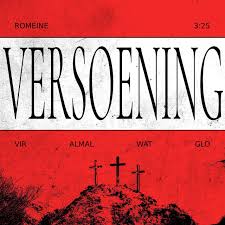 Inleiding
“21MAAR nou is die geregtigheid van God geopenbaar sonder die wet, terwyl die wet en die profete daarvan getuig, 22die geregtigheid naamlik van God deur die geloof in Jesus Christus vir almal en oor almal wat glo, want daar is geen onderskeid nie; 23want almal het gesondig en dit ontbreek hulle aan die heerlikheid van God, 24en hulle word deur sy genade sonder verdienste geregverdig deur die verlossing wat in Christus Jesus is. 25Hom het God voorgestel in sy bloed as ’n versoening deur die geloof, om sy geregtigheid te bewys deurdat Hy die sondes ongestraf laat bly het wat tevore gedoen is onder die verdraagsaamheid van God — 26om sy geregtigheid te toon in die teenwoordige tyd, sodat Hy self regverdig kan wees en regverdig maak wie uit die geloof in Jesus is. 27Waar is dan die roem? Dit is uitgesluit. Deur watter wet? Van die werke? Nee, maar deur die wet van die geloof. 28Ons neem dus aan dat die mens geregverdig word deur die geloof sonder die werke van die wet. 29Of behoort God net aan die Jode, en nie ook aan die heidene nie? Ja, ook aan die heidene, 30aangesien dit inderdaad een God is wat die besnedenes sal regverdig uit die geloof en die onbesnedenes deur die geloof. 31Maak ons dan die wet tot niet deur die geloof? Nee, stellig nie! Inteendeel, ons bevestig die wet.” (Romeine 3:21–31)
Ja, ek weet, vir baie van ons is dit is eintlik ‘Geloftedag’ of ‘Dingaansdag’, maar lees gerus hierdie artikel van dr. RJ Rushdoony, wat baie belangrik is om ons verlede te verstaan, asook ons hede met die oog op die toekoms. Hopelik mag dit ons almal help om reg te glo en te dink oor ‘versoening’ (Engels: expiation/atonement; sien NGB artikels 21-23; HK Sondag 1, 15, 60, Dordtse Leerreëls), wat nie net ‘n ewigheidsvraagstuk is nie, maar ook alles te doen het my lewe van hier en nou, in al my verhoudings ook: persoonlik, gesin/familie, werksverhoudings, gemeenskap- en volkere verhoudings, ja, alles:
“15Hy (Jesus Christus) is die Beeld van die onsienlike God, die Eersgeborene van die hele skepping; 16want in Hom is alle dinge geskape wat in die hemele en op die aarde is, wat sienlik en onsienlik is, trone sowel as heerskappye en owerhede en magte—alle dinge is deur Hom en tot Hom geskape. 17En Hy is voor alle dinge, en in Hom hou alle dinge stand. 18En Hy is die Hoof van die liggaam, naamlik die gemeente; Hy wat die begin is, die Eersgeborene uit die dode, sodat Hy in alles die eerste kan wees. 19Want dit het die Vader behaag dat in Hom die ganse volheid sou woon 20en dat Hy deur Hom alles met Homself sou versoen nadat Hy vrede gemaak het deur die bloed van sy kruis—ek sê deur Hom—die dinge op die aarde sowel as die dinge in die hemele.” (Kolossians 1:15–20)
Die volledige artikel is hier beskikbaar om te lees: THE ATONEMENT ANALYZED AND APPLIED
Hier onder volg ‘n paar aanhalings uit die artikel, mag dit my… ons almal, elke mens, elke volk, elke leier op elke lewensterrein bring tot verootmoediging, bekering voor ons Here, ek het gesondig, ons het gesondig en het U genade in Christus so nodig (Kol. 1:28; Hand. 17:30,31; 2 Kor. 5:17-21), wees ons genadig Here, bekeer my, bekeer ons, sodat ek, ons ons kan bekeer tot U eer (Klaagl. 5:21; Rom. 11:36). Die artikel help ook om die wêreld om ons, om ons tye, om onsself, en wat in ons harte baiemaal aangaan (en eintlik moet aangaan, Spr. 4:23; Matt. 6:33), te verstaan, en dan ons rus, roeping en hoop in Christus alleen (1 Kor. 1:30,31) te vind.
So, lees gerus hierdie artikel van Rushdoony, natuurlik, altyd in die lig van Hand. 17:11.
Rushdoony skryf* o.a.:
1 LEGITIMATE AND ILLEGITIMATE ATONEMENT
“Expiation and atonement are thus inescapable facts. A distinction must be made, however, between that which meets God’s requirements, and that which man, in spite of himself, renders as a means of escaping guilt, although without success. First, legitimate expiation and atonement meet and fulfill God’s requirements. To make atonement legally means thus to do so in the manner prescribed by God in His word, and in no other way. Because it is God’s law which all sin violates, it must be God’s law alone which sets the terms of reconciliation. No thief, adulterer, or murderer has any legal or moral grounds to set the terms of his forgiveness and reconciliation. He does not make the law, and he has no legitimate bargaining power with respect to it.
Second, illegitimate expiation and atonement are man’s attempts to remove the penalties for sins on his own terms, in his own way, and in his own time and place. In all false expiation and atonement, there is no lack of suffering and punishment, far greater indeed than in legitimate atonement, but there is no release. …
Legitimate and illegitimate expiation and atonement are in two directions, God-ward, and man-ward. First, all sin is an offense against God, and all sin requires restitution to God. This is the theological aspect of making atonement. The terms are strictly specified by Scripture. Second, sin also is man-ward, in that people are robbed, killed, raped, injured, slandered, despoiled by fornication and adultery, defrauded, and so on. Restitution must be made also to man, and this is the anthropological side of making atonement. Civil forgiveness follows such restitution, even as theological forgiveness follows restitution to God. Here again the terms of restitution and restoration are specified by God’s law-word.
2 FALSE ATONEMENT IN CHURCH AND STATE
False religion offers illegitimate expiation and atonement, and false civil orders offer illegitimate expiation and atonement. Examples of the latter are the prison system, rehabilitation programs, psychiatric treatments, and so on, all very much with us. When false religion and false civil government offer men false expiation and atonement, the social order begins to disintegrate. It may talk about love, brotherhood, and community, but it will be marked by hatred, enmity, and social warfare. Men will be at war with themselves and with other men, torn apart by self-hatred and a hatred of the world and life. Illegitimate expiation and false atonement in church and state mean that the social order begins to exhibit the marks of hell, and there is neither peace nor community. …
3 ATONEMENT IS IN CHRIST ALONE
At the heart of Christian faith is the fact that sinful man, incapable of making atonement to God, is redeemed by the atoning work of Jesus Christ. This great act is set forth typically in the Old Testament sacrificial system, and it is to the Old Testament we must look first for its meaning. We are told of man’s fall, and the subsequent course of mankind (Gen. 3–5). Man as a sinner cannot render unto God that holines sand righteousness which is God’s due. Lawless man is in all his being anti-God and is no more capable of faith in God and obedience to God’s law than is a dead man capable of dancing a jig. Paul in Roman 3::9–20 stresses the total inability of man justify himself by self-righteousness. The sinner’s self-righteousness compounds his sin.
Salvation is entirely the work of the triune God through Jesus Christ. Because it is entirely God’s work, it is academic to discuss whether or not man can exercise his supposed free will. If God is man’s creator, man’s will, and all his being, is the handiwork of God and a part of His plan. For Arminians to assume some area of independence for man is to assume that God is not wholly God, and that man constitutes an area of independence from God in the universe. …
4 ATONEMENT AND REGENERATION
We cannot separate the facts of atonement and regeneration except for theological analysis: in life, they are inseparable. No man is regenerate without Christ’s atonement, and only the regenerate are atoned for through Christ. To speak of Christ having died for all men as individuals (rather than all men, i.e., all peoples, races, tongues, and tribes) is in essence the same as saying that Christ has regenerated all men, an impossible statement. Can we limit this by saying Christ opened up the possibility of atonement and regeneration for all men? Emphatically not, because the crossdid not constitute a possibility but the fact of expiation and atonement.
Moreover, there can be no possibility outside of God without a denial of God. All the possibilities of atonement in the cross were and are of God’s sovereign choice and predestination. The idea of a universal atonement dethrones God and enthrones man. The worldwide nature of God’s Kingdom is set forth in Psalm 87. It develops the thought of Psalm 86:9–10: All nations whom thou hast made shall come and worship before thee, O Lord: and shall glorify thy name. For thou art great, and doest wondrous things: thou art God alone.
Thus, the very psalm which restricts the Kingdom of God to those born by God’s choice into the covenant speaks of God’s sovereign grace to the Gentiles. Leupold titles the psalm “The Glorification of Zion by the Adoption of the Gentiles.” The universalism of the faith is eschatological: it is not a universal atonement but a worldwide dominion by God’s sovereign and efficacious grace. …
5 MACOCHIST-SADIST (MAFIA) ATONEMENT
“When man is guilty, or feels guilty, he suffers. When he suffers, he resents the fact that he does, and he is determined that others should suffer also. For him the world is out of joint because he himself is, and someone must pay for this. Vicarious suffering and sacrifice is demanded by covenant-breaking man, ancient and modern, as a means of satisfying his own outrage at being made to suffer. When Cain was angry at God, he killed his brother Abel, and Lamech (Gen.4:23–24) made it clear that “whoever wrongs me in the least forfeits his life.” The “wrong” could be a fancied one: Lamech made himself the judge, and others a vicarious sacrifice to his own assertion of autonomy. The motive in all non-biblical vicarious suffering and sacrifice is thus a tainted and evil one. Basic to man’s life, politics, and religion is this effort to lay his own guilt upon others. Even in masochistic self-punishment, there is a strong sense of the evil and oppressive world of God and man which “requires” such suffering. The masochist is an injustice collector, to use the apt phrase of Dr. Edmund Bergler. The world and God are to him dispensers of injustice, and he is the perpetual and long-suffering victim.
It is clear thus that vicarious suffering and sacrifice is a part of the life of fallen man. The masochist suffers, he believes, because God and man are evil, and he is their appointed and innocent victim. The sadist, on the other hand, lays his guilt on others and requires them to accept the role of a vicarious sacrifice. But a still deeper motive is also always present. All men who are covenant-breakers are not only tainted in their motives but guilty men as well. Although they may consciously deny or excuse their guilt, in their hearts they know that they are guilty. It is thus guilt, injustice or unrighteousness, which leads them to suppress the knowledge of God (Rom. 1:18–21). They are guilty in relationship to God and His law; they seek to make themselves gods and their own source of the determination of good and evil, of morality and law (Gen. 3:5).
Denying God is basic to their denial of guilt. If there be no God, then man cannot be an offender against a myth, a non-existent thing. Basic to atheism is the flight from guilt and responsibility. However, man is God’s creation, and every atom of his being witnesses to God, as does all creation. There is thus for him no escape from the witness of God (Ps. 139). At every hand, he is confronted by God, God’s claims on him, and his guilt before God. Man thus stands guilty in all his being, and inescapably so, as long as he is a covenant-breaker.”
6 SIGMUND FREUD’S ANSWER TO THE GUILT OF MAN
Sigmund Freud saw man as inescapably guilty, and he held that, until the problem of guilt were solved, religion and priestcraft could never be abolished. Guilty men would seek somehow to find relief through religion, and some sort of religious atonement. The abolition of religion could only be properly effected by reducing guilt to a scientific problem and explaining it away as a survival of man’s primitive past and of ancient drives within his unconscious being.
The practical effect of Freud’s solution was to create a new priestcraft to deal with the problem of guilt, psychoanalysts, with psychologists and psychiatrists also engaged in a like task. Man seeks, in his sin, a sinbearer to bear the burden of his guilt. Hence, vicarious sacrifice is basic to his outlook. Someone must pay he believes, and pay heavily for the suffering of others. The masochist seeks himself as the vicarious victim. He makes atonement for his own guilt by means of masochistic activities, but, even in so doing, he is eloquently protesting against God and life for requiring so great a price. … Vicarious sacrifice is inescapable. In covenant-breaking man, it means sado-masochistic activities; it means punishing various classes, races, or peoples as the guilt-bearers for the rest of society.It means a politics of guilt and hatred, and a constant social revolution, as one group after another seeks to absolve man and society of guilt by punishing a chosen “evil” class or group which is made responsible and guilty for man’s sins and problems.
The failure of churches to understand the meaning of vicarious sacrifice and the freedom it creates has been disastrous to man and society. The presence of covenant-breaking forms of atonement is always a menace to man and society.”
7 FALSE IMPUTATION REQUIERS A FALSE SACRIFICE
“False imputation has almost the status of a science today. The source of evil is regularly traced to a group, class, or race. Capitalism, communism, the military-industrial complex, Puritanism, the blacks, whites, and so on are seen as the root causes of evil in the world. More sophisticated forms in psychoanalysis and psychiatry impute sin to our parents, our environment, our “primitive” ancestors, and so on. … The psychiatric confessor receives confession in order to impute guilt to some other person, thing, event, or cause than the confessing person. There is absolution by false imputation: the confessing person’s guilt is transferred and imputed to another person or cause. Basic to modern psychiatry and psychology, as well as to its politics and sociology, is an essential environmentalism.
Environmentalism is simply a form of imputation, and the modern world is governed by this false doctrine of imputation. Since all of us are both the victims of this environment, and, at the same time, the environment for all other people, we thus impute our small quota of sin and guilt to others and also have imputed to us the sins of our entire age and world. In every way, man is the loser! Moreover, he exchanges a true for a false sense of responsibility: he imputes personal sins to others while assuming sins that are not his own. …
But this is not all. False imputation requires a false sacrifice. Someone must pay the penalty for the sin and guilt, and the net result is that, in humanistic societies, social energies are directed, not towards godly reconstruction, but towards making the guilty class or group pay the penalty. Since the accused group has a different idea of who should be sacrificed for the social good, the result is civil conflict and sometimes blood-letting. False imputation requires a continual sacrifice of the offenders, and the more grievous the conflict, the more bloody the sacrifice.
8 BIBLICAL IMPUTATION
“In biblical imputation, the sinner must fully recognize that the sins imputed to the sacrificed are his own. The evangelical formula is, “Christ died for my sins,” not for sin in general, nor for our sins, but mine. Sin does not belong to the environment, to capitalism, communism, nor our parents. It is personal, and it is mine. In the words of the Office of Compline, it is “my fault, my own fault, my own most grievous fault.” Biblical imputation is also the birth of responsibility. The truly redeemed, as against false professors, are responsible persons.
Biblical imputation transfers us from the irresponsibility of the fallen Adam and from his false imputation (“The woman thou gavest to bewith me, she gave me of the tree, and I did eat” [Gen. 3:12]) to godly responsibility. Instead of imputing guilt to others, we assume the responsibility; we find in Christ our atonement by His vicarious sacrifice and our freedom from sin and guilt, from irresponsibility, and from false imputation.”
9 FALSE IMPUTATION SEEKS FALSE SCAPEGOATS
False imputation breeds not only irresponsibility, an inability to faceup to sin and guilt, but false sacrifice. All who are members of the humanity of Adam are ever involved in looking for sacrificial victims. Whatever the problem or offense, a sin-bearer is sought out as the scapegoat. Whereas with the biblical scapegoat there was a personal nd total confession of sins, and all men as sinners were individually and nationally to see themselves as guilty before God for their transgressions, humanism sees things differently. The offense is in essence against man, because its definition of law and of sin is man-centered.
Man then must make atonement to man, and be sacrificed to man. Sin is not seen as the human condition of the entire humanity of Adam but as an attribute of a class, group, or race. The sin-bearer and scapegoat is then a guilty segment of humanity which must be made the victim, i.e., the capitalists, communists, blacks, whites, male chauvinists, and so on. Then all men see the problem as the sin and guilt of the other group,and all men try to effect atonement and salvation by sacrificing all other men. History then becomes, as it has been, a bloody battle-ground. Politics becomes in the hands of humanists the art of provid-ing scapegoats and sacrificial victims.The word sacrifice comes from the Latin sacrificium, sacer, holy, and facere, to make, so that it means that something is forfeited or destroyed in order to reestablish a communion and to make holy the sacrificer. This Christ does for us.
10 RACISM AND ATONEMENT
…. Because biblical imputation and sacrifice go hand in hand with responsibility, and atonement is also accompanied by regeneration, Christ’s sacrifice does make holy. Humanistic sacrifices intensify sin. To illustrate, racism is today a major sin in the eyes of humanists. Thus, where whites have been in the past guilty of racism, and of victimizing other races, they must now be victimized and sacrificed to make atonement for their ancestors’ sins.
But the human condition outside of Christ involves total depravity, i.e., every aspect of the individual is governed by the fall and sin, and every people, tongue, tribe, and race is affected totally by sin. Thus, to stay with racism, no oppressed race has ever lacked its own form of racism as well as the full complement of sins. One group may be culturally richer in its inheritance, but both oppressor and oppressed have a common problem. Exchanging places does not solve that problem, nor does the idea of equality, which is, together with inequality, an abstraction and a meaningless myth when applied to the concrete and actual situations of men and races.
As there are differences between members of one family, so there are also between members of one nation, or one race. Abstractions only complicate the concreteness of human problems. If man’s problem is sin, then political abstractions and political attempts to solve problems by finding victim groups are dangerously false, nor do they solve the root problem. Political scapegoats are found, and the problem is intensified, because it is falsely dealt with, in that irresponsibility is fostered. Laws can no more abolish racism than they can abolish sickness, death, or bad weather.
How then can we deal with racism? We recognize, first,that there is a basic division in humanity, between those who are of Adam, and those who are of Christ. Second,those who are of Christ are only those who manifest the works of Christ. “By their fruits shall ye know them”(Matt. 7:20). The regenerate do not live by man’s law and mores but by God’s word and law (Matt. 4:4). In terms of God’s word and law, they seek the reconstruction of all things.
If we pinpoint the evil as racism,communism, or capitalism, we may or may not deal with actual evils,but we do so then from a perspective which is false and in itself evil.We fail to see sin in its true nature. We become self-righteous, and, if wedeal with actual victimization, our answer is to transfer victimizationto another group. Humanistic peace treaties lay the foundations for the next war, and humanistic solutions become the fabric of the new problems, because in essence they involve false imputation and require falsesacrifices. These sacrifices do not make holy: they pollute humanity. Christ’s sacrifice redeems the humanity of the new Adam and makes it righteous or just. As Paul says,
‘But now the righteousness of God without the law is manifested, being witnessed by the law and the prophets; Even the righteousness of God which is by faith of Jesus Christ unto all and upon all them that believe: for there is no difference: For all have sinned, and come short of the glory of God: Being justified freely by his grace through the redemption that is in Christ Jesus: Whom God hath set forth to be a propitiation through faith in his blood to declare the remission of sins that are past, through the forbearance of God. To declare, I say, at this time his righteousness: that he might be just, and the justifier of him which believeth in Jesus.’ (Rom. 3:21–26)
Man’s obedience to the law, if that were possible, could not effect man’s salvation. The justice or righteousness of God, to which the law and the prophets witness, requires the penalty of death upon sin. All men are sinners, and none are righteous in and of themselves. The atonement and justification of the people of Christ is thus not of themselves but of Christ. By means of His atoning sacrifice, He effects the remission of our sins and makes us legally righteous before God. Christ’s is the one true sacrifice for sin.
Where a false sacrifice or victimization for sins is effected, a false order and a false peace are created. If one problem is alleviated, it is only to create another. In the humanistic worldview, we are all of us victims, and we are all of us victimizers, because we belong to a group, race, class, or profession someone can find responsible and hence guilty for their plight.
Men endlessly document their humanistic doctrines of imputation in order to “solve” problems of poverty, racism, war, class conflict, crime, and all things else. Because of our extensive social interlocks, all these solutions have a semblance of truth. The roll-call of “facts” is an endless one. We are thus guilty of racism, and we are also the victims of capitalism, socialism, fascism, or communism. We are alternately victim and victimizer and always more and more the slaves of the civil government which seeks atonement by imputing sins falsely to these various factors. Politics becomes the art of imputation so that some group or class may be sacrificed in order to save society. False imputation destroys society, however, because it leads to false victimization, to making another group the scapegoat.
In the Bible, the people had to identify themselves with the scapegoat. It was the sin of all the people which the scapegoat bore. In humanism, others are the scapegoats, and all sins and problems are imputed to them.
The consquence is self-righteousness and hypocrisy, and also social anarchy andcivil conflict. In trying to victimize one group, all are sacrificed; by failure to confess total depravity, sin is magnified and given status as good politics and sound sociology. False imputation leads to false sacrifice, and the result is death, not life.”
11 TRUE PEACE, FREEDOM, REST AND THE ATONEMENT
“One of the great proclamations of Scripture sounds forth in Romans5:1–2 which, while specifically referring to justification, sets forth thepower and the privilege of the atoned:
“Therefore being justified by faith, we have peace with God throughour Lord Jesus Christ:By whom also we have access by faith into this grace wherein westand, and rejoice in hope of the glory of God.”
Because our atonement, our reconciliation to God, and our justification are totally the work of God through Jesus Christ, our security is firmly grounded in the Lord, and we have peace. We are released from guilt into faith, grace, joy, and hope. Peace with God is an impossibility on man’s terms, or by man’s works.The sinner cannot find peace nor a clear conscience. Because he is a guilty man, he is deeply and thoroughly involved in sadomasochism and is in flight from reality. He seeks escape in the fantasy world of fiction, entertainment, and self-pitying indulgence, because there is no escape in reality.He is a self-doomed and willfully blind man.
The atoned, however, have peace with God. They are delivered from the enervating power of guilt into the freedom of godly action. True faith thus is alien to charnel-house theology; instead of bewailing mortality and concentrating mournfully on the dead bones of its fallen estate, it works joyfully in Christ to do His will. The Great Commission does not ask us to spend our days mourning over past sins and what we once were but to go forth in Christ’s power, commanding all nations of the world by teaching them to observe all things” which our Lord commands, and to baptize them into the new creation (Matt. 28:18–20). … The atoned do not evaluate themselves in terms of either their pride or their guilt: God is true, and God declares them to be reconciled in Jesus Christ, to be atoned and justified by His sovereign grace.
Atonement thus means freedom. It is freedom from sin and guilt, and from the fallen humanity of the first Adam. We are freed from an endless dwelling on the past, the mark of hell, and are given a life of hope, power, and glory. The atonement is God’s great Emancipation Proclamation. It releases us from the slavery of sin and death into the freedom of righteousness and life. This means the ability to rest.
There is neither rest nor peace for the wicked (Isa. 48:22). It is the mark of hell to be endlessly concerned with the past, trying to rearrange, edit, and alter past events (Luke 16:20–31). The redeemed work to alter the present and the future by means of God’s law-word. Moreover, being heirs of life, they can rest, one day in seven, one year in seven, two years at the end of forty-eight years. Those who are the living dead cannot rest: life is always running out on them, and, with unceasing and sleepless activity and fretful self-indulgence, they try to seize life, but without joy, peace, or rest. True rest and true work go together. Godly rest is productive of faith, energy, and action, and godly work is marked by joy, peace, and rest. Thus, the atonement also means the ability to work productively and effectively, because we know that our labor is never vain or futile in Christ (1 Cor. 15:58).
12 LAW AND ATONEMENT
“Because priority is given to manin pietism, man then assumes a place of sovereignty: God’s legal act,the atonement, is then available to all who of their own free will choose Christ. The result is an ineffectual legal act made effective only by man’s personal choice. …. It is a real and objective law, which is broken by sin. That law is not a mere code which represents a human demand: it is the word which sets forth the righteousness of the living God. Our redemption from the penalty of the law for sin is Christ’s work. We are not, as Murray pointed out, redeemed from the law itself, because the law is summed up as our obligation to love the Lord our God with all our heart, mind, and being, and our neighbor as ourselves:
“It would contradict the very nature of God to think that any person can ever be relieved of the necessity to love God with the whole heart and to obey his commandments.”
The atoned are redeemed from the penalty of the law into the power of the law. The law expresses the righteousness of God, and it is the means to dominion (Deut. 28). Our religious experiences are thus at best hardly secondary to the supreme importance of God’s great act, the atonement. The atonement is the charter of man’s freedom.”
_____________________________________
* Subopskrifte en beklemtonings bygevoeg.
Meer oor Rushdoony en Chalcedon hier.
Artikels op Pro Regno: Rushdoony.
 PRO REGNO
Leave a comment