BAVINCK: CHRISTELIKE POLITIEK VS NEUTRALE OF SEKULERE POLITIEK
“4Al die konings van die aarde sal U loof, o Here, as hulle gehoor het die woorde van u mond; 5en hulle sal sing van die weë van die Here, want die heerlikheid van die Here is groot.” (Psalm 138:4–5)
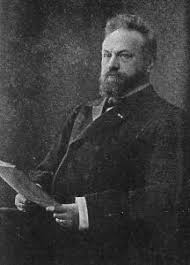
Belangrike lesing van Bavinck oor die Christen en politiek in 1905, sien die voorwoord van sy vertaalde lesing vir die historiese konteks van sy lesing (in Engels vertaal):
Christian and Secular Politics, by
Opsommende artikel van die lesing: Bavinck’s Christian and Neutral Politics
“Bavinck acknowledges the dangers of political engagement. Yet he says that politics is a glorious and holy art. The earth is the Lord’s and its fulness thereof. Nothing is unclean of its own. Politics can be sanctified through the Word of God and prayer. A Christian politician is someone with both a reborn heart and a Biblically formed political vision. Politics is a calling from which the noblest of Christians may not withdraw. If Christians are not serving Christ in politics according to the norms of Biblical justice, then they are serving some false gods that will lead to injustice. Christians cannot serve the Lord part-time. He calls us to His service in every sphere of life with all our heart, soul, strength and mind. Christian principles are needed so that politics will not degenerate into money grabbing at the expense of the taxpayer or into a power seeking enterprise. Bavinck declared that all who name the name of Christ, also in politics, should avoid all appearance of evil.”
Ons leer daaruit beide a) die belangrikheid van Christene om “in die amp van die gelowige” betrokke te wees in die politiek en goeie godsvresende leiers daar te stel, en, b) moet op prinse nie vertrou nie, nie eers die bestes van hulle nie, want nie net goeie en slegte leiers kom en gaan nie, maar ook beter of minder goeie bedelings.
As gereformeerdes glo ons aan ons roeping om die evangelie te verkondig en te leer om alles te onderhou (Matt. 28:18-20), hier op aarde tot die laaste dag, ons glo dat kerk en kultuur en volk en grond belangrik is, elkeen in sy regte bybelse konteks, in sy Koninkryk op elke terrein, maar dit moet dit altyd wees met die gebed en verlange na die finale koms van sy Koninkryk met die voleinding, die nuwe hemel en aarde, waarin alles in die kosmos, en ook ek as begenadigde sondaar, alle uitverkorenes onder alle stamme, volke en nasies, finaal en heeltemal volkome sal wees.
Ons kan en mag daarom nie ontken dat daar wel fokus, prioriteite, en ‘eers’ sake is nie, sien Matt. 6:33,
“Maar soek eers die koninkryk van God en sy geregtigheid, en al hierdie dinge sal vir julle bygevoeg word.” (Matthew 6:33)
Dit is juis as ons nie ‘n Matt. 6:33 bril op het nie, dat ons begin haat, vloek, verbitterd raak ens… soos die heidene (sien Jesus se woorde in Matt. 6:19-34, veral vers 24 en 34 se warskuwings!
Mag die Here ons daarvan bewaar, sodat ons ywerig die Evangelie sal verkondig, en as vrug daarvan, die Woord se beginsels laat spreek op elke terrein van lewe en denke, insluitende die politiek, soos oom Paul Kruger sou sê.
Lees gerus Bavinck se lesing en sien hoe aktueel dit is en baie sake aanspreek van ons tye, hier is ‘n paar aanhalings (opskrifte en beklemtonings bygevoeg):
Vertrou nie op prinse… Ps. 146:3-5
“Our party does not stand or fall with a person, because it lives from principles that have stood the test of time. God can deliver through few or many, through great or little strength. They never lose heart who truly believe in the Lord’s providential order.”
Profetiese woorde, want Nederland was reeds maar het nog baie meer na 1905 kerklik en polities verdeeld geraak, en dit duur voort en nog meer… so ook in SA:
“For the battle will be fierce—even more furious and ferocious than in 1901. The issue is one of “to be or not to be” for liberalism in all its nuances. Should it win, it may push back Christian action for many years. But if it loses, it will probably break up permanently into different groups. Thus it will exert all its strength and call up its last man to rise from its fall and resume its former dominance also in this century.
Liberalism’s mistake was that it used to act as if we did not exist. They treated believers as pariahs and wanted to be lord and master in the land. But the cabinet consisting of members of the Christian parties followed a different path and from the outset placed itself above the parties, recognizing them all as parts of the same nation.
It is this antipathy toward the Christian cabinet and this desire to recapture the seats of power that have shepherded the divided liberals back together again. The Federated Liberals and the Union Liberals understand that if they are to have any chance of success at the polls this June, they will have to put their differences aside and form one bloc. …. And in that case we cannot blame them when they raise slogans like Against the clericals! Away with the Christian cabinet! Down with Kuyper! For then these negatives strongly imply something positive. However, when we try to find this positive element in the program the liberals have adopted, we look in vain and are sadly disappointed. … Their opposition would have been powerful and their actions truthful if they had had the courage to raise as their slogan, for example: Permeate the whole of public administration and national life with the secular spirit! or Universal suffrage for men and women! For both these wishes are not in the program of the present government, nor shall they ever be fulfilled by it.”
Neutrale politiek is ‘n mite!
“The entire history shows how dishonest their campaign slogan is. At this point it is hard to say what this attempt at collaboration will result in. What will predominate in June: the choice for “neutral” politics, or concern for the social question? If the former, then one must vote for a socialist and against a “clerical”; if the latter, then many votes will go to the “clerical” candidate. Thus, liberalism halts between two opinions; its approach is not determined by a firm principle and a well-defined program, but by circumstances.”
Minder staatisme in ‘volkskerk’ in Nederland?
“The nation no longer looks to the state for its religious and moral education. In this respect the people have emancipated themselves and have withdrawn from tutelage by the state. It wishes to stand on its own two feet and follow its own path. It will no longer have the state impose its religion and its morality. Hence there is no longer any coercion. Freedom of conscience and freedom of religion are in practice accepted by all, and among Protestants they are accepted both in theory and from conviction. Granted, they differ about the import of the well-known clause in Article 36 of the Belgic Confession. Yet even those who wish to keep this clause reject all coercion in matters of religion and maintain the expression in question only because they attach a meaning to it which others are convinced is unhistorical.
The scenes that some opponents in their heated imagination are evoking of “scaffolds” and “burnings at the stake” can be attributed not only to election fever but also to profound shallowness and ignorance. The times they are a-changing, and so are we—just as we trust our political opponents to have changed and no longer condone the persecutions they were guilty of in the previous century with regard to the Seceders. We therefore ask the Left to acknowledge our conviction that the Gospel of Jesus Christ excludes any and all compulsion in religion. In no way do we desire that the government impose the Christian religion on the populace. By the same token, however, we demand that they not compel us, directly or indirectly, to accept their colorless neutrality. When it comes to liberty, too, we still go the liberals one better.”
Ons is Protestante, so ons moet bybels protesteer in alle tye en omstandighede, ook op die politieke terrein, maar verwag geen utopia op aarde nie:
“Professor Harnack, in one of his lectures held recently in our country, remarked rightly that the early church did not consist of a quiet group of ascetics but of a radical party of progress. And that’s what Christians always are, if they live up to what they believe. They grapple with the new conditions in state and society, in science and philosophy, in art and literature, in business and industry. They prove all things and hold fast to what is good. They don’t sing the praises of “the good old days,” and they don’t bewail the ills of the present. They get involved, and reform things according to what they see as ideal. Even though they know that here on earth things will never be perfect until the second coming of Christ, which guards them against a superficial optimism, still they keep on working and refuse to give up. Their slogan is not respristination—restoring what is past or retaining the status quo—but reformation. Mr. Lohman’s fresh and forceful speech in the House the other day in which he did justice to new conditions regarding pension schemes warmed the hearts of many. None of us likes to keep walking around in the same “old duds.””
Ons grootste skat is die Evangelie van Jesus Christus
“Yet that does not alter the fact that as we prove all things we are obligated to what is good and wish to hold fast to it. Among which we count in the first place the spiritual goods: religion, morality, justice, science and art, the legacy that we have inherited from our forefathers and that we are faithfully to pass on to posterity. Man cannot live by bread alone. Our greatest treasure is the gospel of Christ, and the Kingdom of Heaven that He established on earth is a pearl that exceeds all material goods in value. Unquestionably, a holy task also rests on the civil government where it concerns all those great treasures that have their center in the Christian religion. It does not stand “neutrally” between the truth and the lie, nor is it allowed to take up position there, because it is a minister of God; it derives its origin from him and is accountable to him.”
Geen skeiding tussen God en die staat nie, maar wel onderskeid tussen kerk en staat:
“Never did Groen van Prinsterer or the Anti-Revolutionary Party ever accept a separation of church and state in the sense that the state does not need to reckon with God. Our program of principles states that we believe that the “eternal principles of God’s Word also hold for the political domain” and that government in a Christian nation is “a servant of God and duty-bound to glorify his name.” And the correctness of this belief is vindicated in practice by the fact that neutrality in the sense of indifference is an impossible stance also for the state. The state and public law are constantly in touch with people and human relationships and hence are automatically stirred by the views about religion and morality that live among the people. Government at all times is called upon to act; such action should be shaped by the precepts of morality, and morality is connected to and rooted in a religious faith. In marriage law, in criminal law, in requiring the oath, in Sunday observance, and so forth, the government faces principles in which law and justice are ultimately founded. A state that violates these foundations undermines society, can maintain itself only by power, and digs its own grave. Therefore, so long as the words “by the grace of God” are retained in our laws, the Kingdom of the Netherlands adopts not a neutral but a positive, religious, Christian standpoint. Our life as a nation indeed still rests on Christian foundations.”
“Therefore, bravely and boldly, hold high your Christian banner! Fly our tricolor of God, Orange, and Netherlands! Vote for men who, following in the footsteps of so many of our members of parliament who have already departed, following in particular the soon to retire chairman of the House, Aeneas Baron Mackay—vote for men who are not ashamed to confess Christ in the nation’s councils, and who by way of this confession are in tune with the core of our people and are a blessing for that people. Above all, remember, noblesse oblige. Let everyone that names the name of Christ depart from iniquity, also in politics. And let the election speak to our honored queen this prayer of the Dutch people: Your Majesty, may it please you to retain this administration, because it is the desire of your people, in connection with its past and in conformity with the traditions of your house, that it be governed according to the guidance of the Word of the Lord, in order that it be great in all things in which a small country can be great!”
___________________________________________
Verdere Pro Regno artikels van of oor Bavinck
Meer oor Bavinck: The Bavinck Institute
 PRO REGNO
Leave a comment