“8Skaam jou dan nie oor die getuienis van onse Here of oor my, sy gevangene nie, maar ly saam verdrukkinge vir die evangelie na die krag van God 9wat ons gered en geroep het met ’n heilige roeping, nie volgens ons werke nie, maar volgens sy eie voorneme en genade wat ons van ewigheid af in Christus Jesus geskenk is, 10maar wat nou geopenbaar is deur die verskyning van ons Verlosser, Jesus Christus, wat die dood tot niet gemaak het en die lewe en die onverderflikheid aan die lig gebring het deur die evangelie,” (2 Tim. 1:8–10)
Calvyn se antwoord: “Waarin lê die saligheid van die gelowiges, as alleen (sola) in God se vrye uitverkiesing? … Ons kan hier opmerk, dat as God se uitverkiesing afgeskaf word, die evangelie nie verkondig kan word nie, dat dit dan ‘n onheilige evangelie is, of die leer van Mohammed, en dat daar dan geen kerk of Christendom is nie. Die Heilige Gees wat hier spreek (2 Tim. 1:8-10), moet noodwendig as ‘n leuenaar bewys word as hierdie leerstelling nie aangeneem word nie. Laat ons daarom gedurig veg; want dit is die grondslag van ons verlossing. … Dit is waar, God roep ons op hierdie dag, maar sy uitverkiesing gaan vooraf; ja, en God het ons uitverkies sonder om ons werke in ag te neem, aangesien ons voorheen niks kon doen nie; maar ons is teenoor Hom skuldenaars vir alles.”
In Calvyn se preek oor 2 Tim. 1:8,9, hoor ons o.a. die volgende*:
“… This is the most fit instrument, used by the devil, to deface the virtue of the blood of our Lord Jesus Christ; to bring to nought, and destroy the gospel; yea, and to put the goodness of God out of man’s memory. The devil hath no fitter instruments than those who fight against predestination; and cannot in their rage suffer it to be spoken of, or preached as it ought to be. If we detest the papists (as indeed they ought to be detested), because they have profaned the Holy Scripture, and have marred and depraved the truth of the gospel and the service of God, by infecting all the world with superstition and idolatry, much more are they to be detested who go about to bring to nought God’s election; and endeavour, by indirect and crooked ways, to stop men from speaking of it plainly and openly, and of preaching it as it ought to be.
Wherein consisteth the salvation of the faithful, only in God’s free election?
Would we not have men preach that God hath chosen His, of mere goodness, without regard to any thing whatsoever? Will we not admit this to be such a mystery as cannot be attained to, showed and declared to us as far as God wished to reveal it? If we do not admit this, we enter into a conspiracy with Satan; as though Jesus Christ suffered in vain, and the passion that He suffered profited the world nothing. We may here remark that the gospel cannot be preached, that it is a profane gospel, or the doctrine of Mahomet, that there is no church nor Christianity, if God’s election be abolished.
The Holy Ghost that speaketh here must needs be proved a liar, if this doctrine be not received. Therefore, let us fight constantly; for it is the groundwork of our salvation. How can we build, and maintain the building, if the foundation be destroyed? St. Paul showeth us here with what virtue we must fight, and how we shall come to this inheritance which was so dearly purchased for us: he showeth us how we shall enter into the possession of the glory of God and make an end of this building and faith. My friends, we must be grounded upon the grace that was given us, not today nor yesterday, but before the world began.
It is true, God calleth us at this day, but His election goeth before; yea, and God chose us without any respect to our works, as we could have done nothing before: but we are debtors to Him for all; for He drew us out of the bottomless pit of destruction, wherein we were cast, and past all hope of recovery. Therefore, there is good reason for us to submit ourselves wholly to Him, and rely upon His goodness, and be thoroughly ravished with it. Let us hold fast this foundation, as I said before, unless we will have our salvation perish and come to nought. This doctrine is profitable for us if we can apply it well to our own use.
They that would not have us speak of God’s election will say, it is not necessary. But such men never tasted God’s goodness, neither do they know what it is to come to our Lord Jesus Christ. If we know not that we are saved because it pleased God to choose us before the world began, how can we know that which St. Paul saith to us; to wit, that we should give ourselves wholly to God, to be disposed of at His will, and to live and die in His service? How can we magnify His name? How can we confess that our salvation cometh from Him only (sola! – slc), that He is the beginning of it, and that we have not helped Him therein? We may say it with our mouths, but unless we believe it, as here set forth, it will only be hypocrisy.
Therefore, let us learn that the doctrine of God’s election, whereby we are taught that He predestinated us before the world began, ought to be preached openly and fully, in despite of all the world that would stand against it. And not only so, but we should know that it is a very profitable doctrine for us; because we cannot lay hold upon the infinite goodness of God, until we come thither. Unless this point be well cleared, God’s mercy will be always disguised. I say, unless this be made plain to us, that He hath chosen us before we were born, and before we could prevent Him.
Men will frequently say that we were bought with the blood of our Lord Jesus Christ, and that we are not worthy that God should show us such great mercy: they will likewise say, who hath part and portion in such a redemption as God hath made in the person of His Son? Even they that will; they that seek God; even they that submit themselves to Him. They that have some good motives, and are not rude; those that are good natured, and have some good devotion. When men make such a mixture, and think they are called to God, and to His grace, for something that is in themselves, that they bring something to recommend them to the favor of God whereby they may attain salvation, the grace of God is darkened, and rent asunder.
This is a sacrilege that ought not to be countenanced. For this cause, I said the goodness of God shall never be thoroughly known until this election be laid before us; and we are taught that we are called at this time, because it pleased God to extend His mercy to us before we were born. This doctrine must be explained more at large; but as time will not admit at present, we shall attend to it in the latter part of the day.”
*Bron: sien Calvyn se volledige preek hier – The Call to Witness – 2 Timothy 1:8-9 (Beklemtonings hierbo en hier onder bygevoeg)
_____________________________
Rome se siening van ‘predestinasie’ en Calvyn se antwoord daarop:
General Council of Trent: Sixth Session (Council Fathers – 1547)
CANON XV.-If any one saith, that a man, who is born again and justified, is bound of faith to believe that he is assuredly in the number of the predestinate; let him be anathema.
CANON XVI.-If any one saith, that he will for certain, of an absolute and infallible certainty, have that great gift of perseverance unto the end,-unless he have learned this by special revelation; let him be anathema.
CANON XVII.-If any one saith, that the grace of Justification is only attained to by those who are predestined unto life; but that all others who are called, are called indeed, but receive not grace, as being, by the divine power, predestined unto evil; let him be anathema.
Calvyn: ACTS OF THE COUNCIL OF TRENT WITH CALVIN’S ANTIDOTE
CANON 15.
It is indeed true that to pry too minutely into this matter is hurtful, and therefore to be avoided; but that knowledge of Predestination which Paul recommends dreads neither the stern trident of Neptune, nor all the blasts of AEolus, nor the thunders of the Cyclops, nor any violence of tempests. For he wishes the Ephesians to know and be assured that they have been made partakers of heavenly grace in Christ, as they had been chosen in him before the foundation of the world. (Ephesians 1:4.) Thus therefore it becomes all believers to be assured of their election, that they may learn to behold it in Christ as in a mirror. Nor is it to no purpose that Christ animates his followers by this consoling reflection — that not one of those whom the Father hath given him shall perish. (John 6:39.) What else, good Sirs, is a certain knowledge of our Predestination than that testimony of adoption which Scripture makes common to all the godly?
CANON 16.
That I may not be forced often to repeat the same thing, what they here condemn is nothing else than what I have previously shown to have been delivered by the same oracles of the Holy Spirit.
CANON 17.
The words of Luke are, “All who had been pre-ordained to life believed.” (Acts 13:48.) He intimates whence it was that in one audience such a difference existed that some believed, and others persisted in their obstinacy. In like manner Paul asserts, that those are called whom God has previously chosen. (Romans 8:29.) Are not also the reprobate called? Not effectually. For there is this difference in the calling of God, that he invites all indiscriminately by his word, whereas he inwardly calls the elect alone, as Christ says, “All that the Father hath given me will come to me.” (John 6:37.) In short, if any man is ignorant that the Spirit of regeneration is given to none but the regenerate, I know not what part of Scripture he holds.
____________________
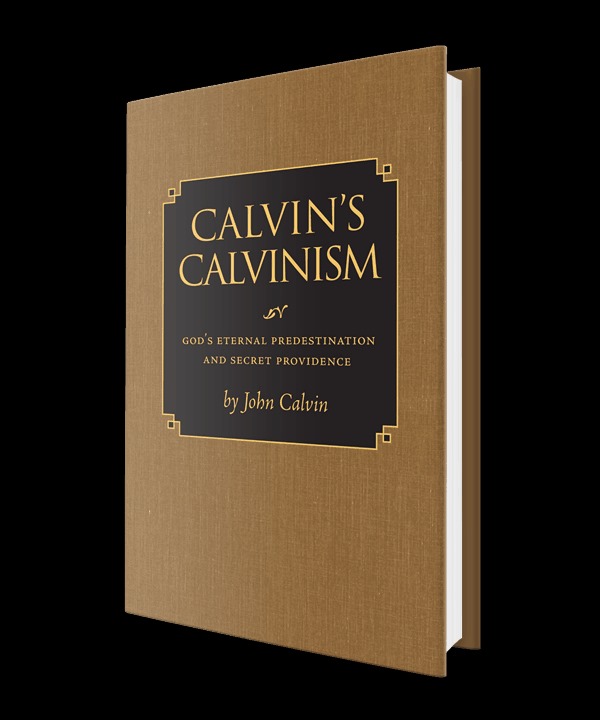
Sien ook: Calvin’s Calvinism “Calvin’s Calvinism, consisting chiefly of God’s Eternal Predestination and Secret Providence, is, as the Genevan Reformer himself states, his fullest presentation of the absolute sovereignty of God—going beyond even its treatment in his Institutes.”
_______________________
Sien ook NGB artikel 16; HK v/a 54 en die hele Dordtse Leerreëls hier: Dordtse Standaarde.
Sien ook hierdie oorsig: What Is Predestination? A Biblical, Historical & Theological Overview


The Patristic Roots of the Reformed Faith
Inhoud: 0:00 John Henry Newman 28:35 The Patristic Roots of Sola Scriptura 1:01:50 The Church vs. The Bible? 1:25:13 Baptism vs. The Bible? 1:42:16 Making God Our Debtor? 1:46:30 The Church Is In the Bishop? 1:56:55 The Lord’s Supper vs. The Bible? 2:08:55 Baptizing Caesar 2:27:19 Reformation vs. Restoration
(This video is presented by Christ Presbyterian Church, a congregation of the Orthodox Presbyterian Church in Magna, Utah. (www.gospelutah.org)”)
https://www.youtube.com/watch?v=JL3ygb6ZsjQ
*Dirk Postma oor Gen. 3:15 en moeder Maria (en my opmerkings oor die Latynse Vulgaat se vertaling van Gen. 3:15, waarna Postma verwys; beklemtonings bygevoeg)*
“Vraag 18: Is Maria, die moeder van die Here, dan ook sonder sonde gebore?
Antwoord: Die Roomse kerk leer dit, maar tot so ‘n standpunt het die Heilige Skrif nie die minste aanleiding gegee nie, Sy word wel genoem: ‘die begenadigde van die Here,’ en sê self: ‘My gees verheug hom in God. my Saligmaker’ (Lukas 1:28, 47). In hierdie voorreg deel al die gelowiges saam met haar. Sy alleen was egter die mees geseënde onder die vroue omdat sy die moeder van die Heiland van die wêreld geword het. Daar bestaan ook geen noodsaak dat sy sonder sonde gebore moes word nie, *want nie sy nie*, maar haar Seun, terselfdertyd God se Seun, sou ons Saligmaker wees. *Nie sy nie, maar Hy, naamlik “die saad”, haar Seun, sou volgens Genesis 3:15 die kop van die slang vermorsel*. (Vergelyk ook met Hebreërs 2:14-15:) (My Handleiding vir die Godsgeleerdheid, 1875 [2026], bl. 108-109.)*Opmerking* op hierdie laaste belangrike woorde van Postma, sy verwysing na Gen. 3:15, die ‘moederbelofte’, waar die Protestantse Bybels vertaal ‘Hy… hom’ en die Latynse Vulgaat Bybels (Sy/haar; She/her; nota: ek sien later moderne Katolieke engelse vertalings vertaal wel ook ‘hy/he’):
“15En Ek sal vyandskap stel tussen jou en die vrou, en tussen jou saad en haar(Hebr. hi) saad. *Hý*(Hebr. hu) sal jou die kop vermorsel, en jý sal *hom* in die hakskeen byt.” (Genesis 3:15)
“inimicitias ponam inter te et mulierem et semen tuum et semen illius *ipsa (‘sy/she’)* conteret caput tuum et tu insidiaberis calcaneo eius” – Latynse Vulgaat
“I will put enmities between thee and the woman, and thy seed and her seed: *she* shall crush thy head, and thou shalt lie in wait for *her* heel.” – Engelse vertaling van die Vulgaat
Die ou “Catholic Encyclopedia” verdedig die Vulgaat se vertaling as volg:
“The reading “she” (ipsa) is neither an intentional corruption of the original text, nor is it an accidental error; it is rather an explanatory version expressing explicitly the fact of Our Lady’s part in the victory over the serpent, which is contained implicitly in the Hebrew original. The strength of the Christian tradition as to Mary’s share in this victory may be inferred from the retention of “she” in St. Jerome’s version in spite of his acquaintance with the original text and with the reading “he” (ipse) in the old Latin version.”
Nou, behalwe natuurlik dat die oorspronklike Hebreeus ‘hy’ (‘hu’) het by Gen. 3:15 (so ook die Septuagint, die Griekse vertaling van die OT), en behalwe dat daar natuurlik groot debatte hieroor was deur die eeue, tussen protestant en roomse apologete, en selfs onder mekaar wat die ‘beste’ vertaling is en al die moontlikhede hoe dit wel vertaal kan/mag word al dan nie; is dit nogal ironies, dat dit lyk vir my dat Rome (ten minste in die verlede?) soms ‘letterlike vertaling’ eis sonder enige enige teëspraak of kompromie, bv. oor Luther se Rom. 3:28 vertaling:
Hoe durf Luther ‘n ‘explanatory version’ gee van Rom. 3:28, nie net ‘geloof’ nie, maar sy ‘geloof alleen’ [Duits: ‘allein’] in sy Lutherse Vertaling. Die OAV het nie Luther gevolg deur ‘alleen by te voeg’ nie, al staan die saak/waarheid (sola fide = deur geloof alleen) daar met die woorde van kontras en uitsluiting: ‘deur die geloof *sonder* die werke’, maar die feit is, die letterlike woord ‘alleen’ is nie daar nie.
Maar, lyk my as dit kom by Gen. 3:15 se vertaling, dan is ‘vryer vertalings’, of ‘explanatory versions’ baie welkom, omdat dit hul Mariologie dien?
Ook, omdat dit hul verderflike sinergisme in verlossingsleer dien, dat die redding van die mens ‘n samewerking is tussen Jesus en Maria, tussen God en mens, en nie ‘n absolute duidelike ‘allein’, ‘n God alleen saak is, ‘n geskenk alleen saak van God aan sy uitverkore kinders is nie, wat dan natuurlik as *vrug/gevolg* wel daadwerklik geloof en bekering tot stand sal bring, maar baie duidelike oorsaak (Here alleen), en die gevolg is die mens se redding deur geloof en bekering, ens (sien Filp. 2:13,14):
“… en *Hy self* sal Israel verlos van al sy ongeregtighede” (Psalm 130:8);
“21en sy sal ’n seun baar, en jy moet Hom Jesus noem, *want dit is Hy* wat sy volk van hulle sondes sal verlos.” (Matt. 1:21);
“9en *in Hom gevind te word*, nie met my geregtigheid wat uit die wet is nie, maar met dié wat deur die geloof in Christus is, die geregtigheid wat uit God is deur die geloof;” (Filp. 3:9), ens.
In al hierdie verse, en daar is soveel meer, is dit Christus alleen (solus Christus), wat die wese en bron van ons verlossing is. Ja, die mens is betrokke ten volle, en as vrug van Jesus se volkome verlossingswerk, volg die mense se betrokkenheid in verlossing.
En daarom, die roem en die eer en die lof …. nogsteeds, ja, van altyd af, maar ook nogsteeds van die tydperk van die Reformasie in die besonder: alleen, alleen, en nogmaals alleen (allein! = sola!) aan die Here vir sy groot genade en liefde. Dus nie lof aan Jesus *plus* Maria, aan Jesus *plus* die Kerk, Jesus *plus* die Pous nie, Jesus *plus* my werke nie (en ook nie Jesus *‘plus’* MY geloof as verbondsvoorwaarde soos sommige ‘verbondsienings’ dit wil stel nie, kontra HK So. 24; NGB art. 22-23), maar aan God die Vader, God die Seun en God die Heilige Gees, alleen al die eer, Rom. 11:33-36 as loflied vir Rom. 1-11, ons ganse verlossing:
“30Maar *deur Hom is julle in Christus Jesus*, wat vir ons geword het wysheid uit God en geregtigheid en heiligmaking en verlossing. 31Daarom, soos geskrywe is: Die wat roem, *moet in die Here roem*.” (1 Kor. 1:30-31)
En daarin alleen – die suiwer evangelie van redding uit genade alleen, geloof alleen, Christus alleen, volgens die Skrif alleen, aan God die eer alleen – verheug en lewe elke gelowige van alle tye en eeue nou in dankbaarheidswerke as vrug en gevolg (sien HK deel 3; NGB art. 24, ens), “… soos geskrywe is: Maar die regverdige sal *uit* die geloof lewe (Rom. 1:17) – ook ons dierbare kosbare geseënde suster, moeder Maria, as sy uitroep soos Dirk Postma aangewys het in sy Handleiding, *en ons saam haar uitroep*, as ons enigste Troos en Hoop, na liggaam en siel, nou en tot in ewigheid:
‘My gees verheug hom *in* God, *my* Saligmaker’ (Lukas 1:28, 47), niks en niemand anders nie (Hand. 4:12).
Amen.