RS CLARK, CALVIN AND THEONOMY
Does God’s law still apply to current civil governments and societies, and in what detail? Or is ‘natural law’ enough for governments to rule today, they do not need God’s revealed laws or bow before King Jesus Christ? What is and should be the relation between church and state, biblically and confessionally?
These and many other questions has been part of a big debate in the second half of the 20th century, and also now to a lesser extent in the 21st century, within the reformed camp in the USA, in the reformed and presbyterian churches. For or against theonomy has been a big debate, unfortunately making many ‘enemies’ among each other, especially surrounding the work of some of the foundational theonomic theologians, like RJ Rushdoony and GL Bahnsen. I thought the debate died down a bit, myself not reading much about it since the beginning of the 2000’s, before then, I studied the topic more, but since then focusing more on other topics.
Someone who clearly is very strongly against anything that looks like or smell like theonomy, and still fighting it with a passion, is prof. RS Clark from Westminster Seminary California.
On his website is his newest article on this topic, where he tries his best to persuade folks not to learn anything at all from reformed theonomists, because they do not agree with his and his colleagues natural law (radical) two kingdoms views which seems to him to be the ‘only’ reformed view concerning ethics related to law, church and state, etc, in their eyes:
Just Discovering Reformed Theology? TheoRecon Is A Toll-Booth You Should Skip
I have tried to give some balanced perspective as a non-american reformed believer, but without giving any reasons, dr. Clark decided to delete my two short contributions to two of his current threads on theonomy. Maybe he decided to just ignore a no name theologian like me, or just don’t like what I am saying, but he has this footnote at his articles which give some explanation, and I must guess which one it is that applies to me:
“Comments are welcome but must observe the moral law. Comments that are profane, deny the gospel, advance positions contrary to the Reformed confession, or irritate the management are subject to deletion. Anonymous comments, posted without permission, are forbidden.”
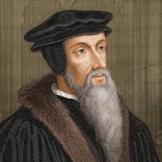
Clark also followed up the above article with this quote from Calvin, which he and many others unforunately thinks settles the debate once and for all, namely “Calvin spoke against theonomy”, the debate is settled, let’s move on … or so he thinks:
Calvin Rejected Theonomy In Favor Of Natural Law
I have answered both Clark’s threads on this topic, and since he deleted it, I am publishing it here.
The biggest lesson for me in these kind of debates that I been following for 30 years, and especially now with Clark’s actions in not allowing my comments, is not whether one is pro- or non- or anti-theonomic as such, but that we should, no matter what camp we in, read and listen to both sides of views, debates, etc., especially if many on those debates are with fellow reformed brothers within the reformed camp.
Yes, we must beware of false doctrines, heresies, guard the true churches (BC art. 29), etc., but I do not believe pro or anti-reformed theonomic ethics (which I believe is another, not the only reformed ethic for God’s law for today, which should be considered within reformed and presbyterian churches, together with other reformed views on this topic, that will be more or less non-theonomic/theocratic) is a area to die for on a reformed hill, I do not believe one should be seen as ‘within or without the reformed camp’ because of being pro- or anti theonomic (with theonomic here I mean specifically Rushdoony or Bahnsen’s kind/version of theonomy, and not theonomy in general through history, which I believe all reformed should be theonomic in general: pro-law in the tradisional 3 uses of the law distinction sense, as is stated in our reformed confessions).
Here is my two replies, with a slight few changes, please read dr. Clark’s article and quote first (see above), and then read my two replies:
My reply 1 to dr. Clark’s “Just Discovering Reformed Theology? TheoRecon Is A Toll-Booth You Should Skip”
“As a non-American reformed believer, trying to read both sides of the Machen’s Warrior Children for decades (Clark’s view on this, see here), in this case, pro- or anti-theonomy/recon reformed views, all I can say is that I also see some serious problems with the (radical) Two Kingdoms (R2K) views espoused by the Westminster California brothers in the reformed camp, such as RS Clark. It is clear that theonomy with it’s problems, and R2K with its problems, both are and wants to be reformed and claim the westminster/dordt confessions heritage, and I see many agreements and disagreements over the years in their debates. Trying to drive out one or the other group from the ‘truly reformed camp’ is futile attempt, at least seen from the ‘outside’.
Yes, there definitely is a difference between theocracy and theonomy, as their will be historical differences between for example Dordt and Westminster, but I really cannot see if one honestly read the reformed authors of the 16/17th century, how the R2K view can be any nearer to the theocratical reformed confessions of the 16th/17th century in regards to the topic of ‘church and state’, than say 20th century theonomy advocates? Theonomy confirms for instance the essence of BC art. 36 (on civil government) and WCF chapter 23 (on civil government), but R2K denies it in favour of a natural law (neutral?) kind of state (theocracy/theonomy says: Christ is King over both Church and State, both church and king is under God’s Law, not only the Church, etc.)
But in saying that, I won’t give the same advice as the article above, I would recommend and say read and learn from all of Machen’s … and Van Til’s, and GH Clark’s, etc.’s warrior children and their struggles to try and keep each other out of the ‘reformed camp’, learn where one can from some excellent sources from all those battling camps, an above all, test everything according to Scripture, Acts 17:11.”
My reply 2 to dr. Clark (Calvin Rejected Theonomy In Favor Of Natural Law)
“Calvin’s battle in that quote (from Institutes 4.20.14) was against the Anabaptistic kingdom ideas of his days, who did not see any changes from Moses to our today, something theocrats and theonomists through history both rejected (they see both continiuty and discontinuity in terms of God law for today’s societies). Calvin was not calling out current or future reformed theocrats and theonomist who believed in the general equity of God’s law for all of life, also for the state, he taught on God’s law for society himself. See also rev. Chris Strevel article dealing in detail with Calvin’s quote, in its historical and theological context of all other Calvin said on this topic, not only the Institutes, but also in his sermons, commentaries, etc.:
“The Theonomic Precedent in the Theology of John Calvin“
But even if one thinks Calvin was “thinking” of Bahnsen, Rushdoony etc. in that quote, then at least it must be acknowledged that Calvin was also not in the (“radical”) two kingdom’s camps of our day at all, as very clearly stated here:
Calvin to King Francis I in his prefatory address in his Institutes (and by implications to all rulers of all times, Ps. 2; Rom. 13. Emphasis added):
“Your duty, most serene Prince, is, not to shut either your ears or mind against a cause involving such mighty interests as these: how the glory of God is to be maintained on the earth inviolate, how the truth of God is to preserve its dignity, how the kingdom of Christ is to continue amongst us compact and secure. The cause is worthy of your ear, worthy of your investigation, worthy of your throne.
“The characteristic of a true sovereign is, to acknowledge that, in the administration of his kingdom, he is a minister of God. He who does not make his reign subservient to the divine glory, acts the part not of a king, but a robber. He, moreover, deceives himself who anticipates long prosperity to any kingdom which is not ruled by the sceptre of God, that is, BY HIS DIVINE WORD. For the heavenly oracle is infallible which has declared, that “where there is no vision the people perish” (Prov. 29:18).”
Wonder if Calvin would also be seen by some as “not within the truly reformed camp” with words such as this today?
What any honest reformed historian would deduce from this quote (together with Calvin’s words in Inst. 4.20.14, and the rest of his works elsewhere) is:
There is both theonomic/theocratic and natural law grounds/aspects found in Calvin’s works, rightly understood and compared.
One modern day camp alone cannot claim higher ground, i.e. “Calvin is on only our side”, that would be a one-sided dishonest reading of Calvin and reformed history and confessions, all in service of some kind of 20/21 century ax battle grinders issue, who read stuff back into Calvin and the reformers… what the motives and reasons for that is, I leave in the Lord’s hands.
Sources
1. Most important, go read Calvin, Rushdoony and Bahnsen (and any other theologian) themselves, ad fontes (back to the sources!), not what others say about them, for or against, that is secondary sources that could be helpful, but not original.
2. One does not have to agree with all detail, to still learn a lot from a past or current theologian. I learn a lot from RS Clark and other Westminster Californian R2K theologians on many other topics, and recommend many of their works, while disagreeing with their R2K, non-literal 24 day creation views, etc. The same with many other (past and current) reformed theologians that are (in my view) much too anti-theocratic/theonomic, but I still love and respect these brothers to learn from them, and recommend them with some reservations. They still are my reformed brothers in the faith, once delivered, and I will fellowship with them. I do not go along with the ‘for or against theonomy’ sjibolet of some zealous warriors (from both sides!).
3. Dr. Clark has given recourses to read for being against our theonomy reformed brothers, you can read it there at his website. But don’t stop reading there…
4. Here are some other sources about the topic, also pro and against, and also some of my own writings (in Afrikaans) wherein I also give my own critiques about christian reconstructionism, etc.:
Die Kultuurbeskouing van RJ Rushdoony, ds. S Le Cornu
(Standard works on the topic: Theonomy in Christian Ethics; By This Standard; No Other Standard)
(A two page introduction and summary by Bahnsen)
“The Westminster Assembly and the Equity of the Judicial Law“
The Bahnsen Project: all his lectures and preaching at sermon audio
(Standard works on the topic: Institutes of Biblical Law, vol. 1-3)
Pro Regno nr.12 – Die teokrasie en teonomie van NGB artikel 36





Leave a Reply